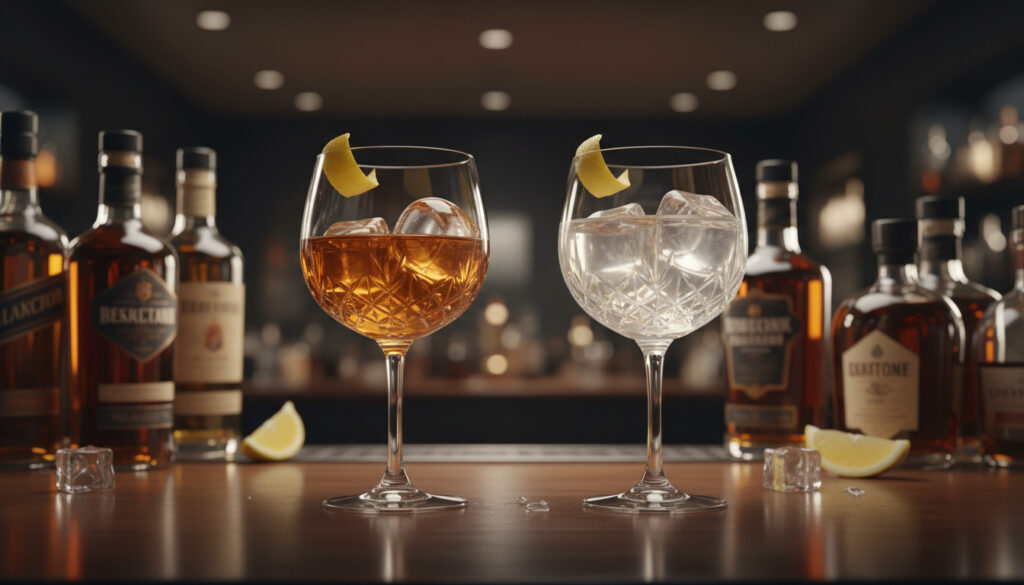
On the Rocks Cocktails – Meaning, Best Drinks and Tips
Ordering a drink “on the rocks” remains one of the most common requests at bars worldwide. The phrase signals a specific style of service where spirits or cocktails arrive poured over solid ice cubes, chilling the liquid while introducing gradual dilution as the ice melts. Unlike mixed drinks that hide liquor behind syrups and juices, this method showcases the base spirit’s character through temperature and controlled water integration.
The terminology has cemented itself in drinking culture, particularly for whiskey enthusiasts who appreciate how cold exposure can tame high-proof heat. Whether referring to a simple bourbon pour or a constructed Old Fashioned, “on the rocks” defines a category of beverages served in lowball glasses with ice remaining throughout consumption.
This guide examines the precise meaning behind the phrase, identifies which cocktails benefit most from ice service, and explains how this approach differs from “neat” or “up” preparations. From beginner recipes to professional bartending techniques, the following sections detail everything needed to understand and execute proper rocks service.
What Does ‘On the Rocks’ Mean in Cocktails?
Definition
Spirit or cocktail poured over ice cubes
Common Glasses
Rocks glass (old fashioned)
Ice Type
Large cubes to minimize dilution
Popular Spirits
Whiskey, scotch, bourbon
- Ice chills the beverage rapidly while slowly diluting it as it melts
- Large cubes or spheres slow melting better than standard cubes
- Service contrasts with room-temperature “neat” pours
- Common for whiskey, bourbon, and stirred cocktails like Negronis
- Drinks are built directly in the serving vessel rather than shaken
- Gradual dilution opens up flavors in high-proof spirits
- The term “rocks” serves as bartending slang for ice cubes
| Fact | Detail |
|---|---|
| Serving Style | Poured over ice in a rocks glass |
| Dilution | Slow melt with large ice |
| Strength | Slightly weaker than neat |
| Best For | Sipping spirits like scotch |
| Glass Capacity | 6-10 ounces |
| Ice Form | Cubes or spheres, never crushed |
| Origin Era | Early 20th century American bars |
| Alternatives | Neat, up, straight up |
What Does Whiskey on the Rocks Mean?
Specifically, whiskey on the rocks describes any whiskey variety—whether bourbon, rye, or Scotch—served over ice in a lowball glass. High-proof bottlings particularly shine in this format, as the gradual introduction of water helps release aromatic compounds while reducing alcohol heat. Bourbon, with its sweeter corn-based profile, reveals vanilla notes through chilling, while smoky single-malt Scotch benefits from ice to temper peat intensity.
Best Cocktails Served On the Rocks
Classic Cocktails Built Over Ice
Several canonical cocktails are traditionally constructed directly in the glass over ice. The Old Fashioned begins with muddling a sugar cube with bitters, adding a large ice cube, pouring two ounces of bourbon or rye, and stirring before expressing an orange twist. The ice balances the sweetness while diluting the spirit slowly. Similarly, the Negroni combines one ounce each of gin, sweet vermouth, and Campari over ice, stirred until chilled. The Americano follows with one and a half ounces each of Campari and sweet vermouth topped with soda water, served over ice for refreshment.
Beginner-Friendly Options
For those new to spirits, simple pours offer accessible entry points. A two-ounce measure of whiskey, Scotch, or bourbon over ice provides a straightforward introduction to how chilling affects flavor. Margaritas also work well on the rocks, combining two ounces tequila, one ounce orange liqueur, and one ounce lime juice over ice with a salted rim, stirred rather than shaken for a different texture than the frozen version.
Large ice cubes or spheres prevent quick watering down compared to standard cubes, maintaining the intended flavor profile longer. Professional bartenders recommend expressing citrus oils over the surface to add aromatic complexity without additional ingredients.
On the Rocks vs. Neat: Key Differences
Understanding the distinction between service styles prevents confusion when ordering. “On the rocks” always involves ice remaining in the glass, while “neat” delivers room-temperature spirit straight from the bottle without additives. Neat pours typically measure two ounces and emphasize pure tasting, whereas rocks service introduces dilution that slightly reduces alcohol strength while opening flavor compounds.
On the Rocks vs. Straight Up
“Straight up” creates the most confusion, as it often means “neat” for spirits but refers to chilled-and-strained cocktails for mixed drinks. Clarifying with bartenders remains essential to avoid receiving a room-temperature shot when expecting a chilled martini in a coupe glass. “Up” specifically means chilled with ice then strained into a stemmed glass without ice remaining—different from rocks where ice stays present throughout consumption.
Which Is Stronger?
Neat service delivers the highest alcohol concentration since no dilution occurs. On the rocks weakens the drink slightly as ice melts, though the rate depends on ice size and ambient temperature. Large cubes minimize this effect, while crushed ice rapidly waters down the beverage. For precise strength control, “up” service chills without ongoing dilution, maintaining the proof longer than rocks service.
While “on the rocks” universally indicates ice in the glass, industry glossaries document the standardization of rocks glasses for this service style. When ordering premium single malts, specifying “neat” versus “rocks” communicates whether you prefer purity or moderated intensity.
How to Make and Serve Cocktails On the Rocks
Ice Selection and Glassware
Proper execution begins with ice selection. Standard cubes work for everyday service, though larger cubes or spheres slow melting optimally. Crushed ice dilutes spirits too rapidly and should be avoided for rocks service. The vessel matters equally: rocks glasses (lowball or Old Fashioned glasses) holding six to ten ounces provide the standard format, their wide mouths accommodating ice without spillage. Tulip-shaped neat glasses suit room-temperature spirits, while stemmed coupes serve “up” drinks.
Building the Drink
Technique follows a specific sequence. Fill the glass with ice first, then pour the spirit or cocktail ingredients over the top. Stir gently for ten to twenty seconds to integrate components without inducing excessive melt. Fresh, filtered ice prevents off-flavors from freezer odors. Pre-chilling glasses in the freezer offers an alternative chilling method that delays initial dilution. Beginners should start with two-ounce pours, tasting as the ice melts to learn their preferred dilution level.
Over-icing fills the glass with too much frozen water, accelerating dilution beyond intended levels. Use enough ice to chill effectively—typically three to four large cubes—without crowding the glass excessively.
Where Did ‘On the Rocks’ Come From?
The phrase emerged from early twentieth-century American bartending culture. Bartenders adopted “rocks” as bar slang for ice cubes, evoking the frozen water’s resemblance to geological formations. The terminology became common in speakeasies and early cocktail lounges, particularly for whiskey service where dilution helped mellow bold, high-proof spirits of the era.
-
Term emerges in US speakeasies as bartending slang for ice
Wikipedia
-
Style popularized alongside the Old Fashioned cocktail in mainstream American bars
Chilled Magazine
-
Standard service method for whiskey and stirred cocktails documented in industry glossaries
Chilled Magazine
What We Know vs. What Varies
Established Facts
- On the rocks universally requires ice remaining in the glass throughout consumption
- Rocks glasses (lowball/Old Fashioned) serve as the standard vessel
- Large ice cubes objectively melt slower than crushed ice, reducing dilution rates
- The phrase originated as American bartending slang in the early 1900s
- No single inventor is credited; the term evolved organically
Variables and Preferences
- Optimal ice size varies by personal taste and ambient temperature
- Precise first documented use date remains uncertain
- Whether premium single malts should be served this way remains debated among purists
- Exact dilution rates depend on glass shape, ice density, and proof
Why Bars Serve Drinks Over Ice
The practice persists because chilling alters flavor perception significantly. Cold temperatures suppress alcohol burn while enhancing certain aromatic compounds. Just as precise measurements matter in 183 cm in feet – Exact Conversion and Height Guide, bartending requires exact ratios between spirit and dilution to achieve balance. The method evolved alongside American drinking culture, moving from straight room-temperature pours to preferred chilled service as ice became widely available.
Culturally, rocks service democratizes spirit appreciation. Beginners often find high-proof whiskey harsh at room temperature; ice makes these beverages accessible while allowing experienced drinkers to taste how flavors evolve as dilution progresses. The format accommodates both contemplative sipping and social drinking without requiring complex shaking equipment or additional mixers.
Expert Perspectives on Ice and Dilution
Large ice cubes prevent quick watering down.
— Expert mixologist, International Bartenders Association
Industry professionals emphasize ice quality as paramount. Fresh, filtered ice prevents off-flavors from compromising premium spirits. Stirring technique—ten to twenty seconds of gentle integration—ensures proper chilling without excessive melt. These standards appear in bartending glossaries and industry guidelines, reflecting consensus on proper technique despite variations in personal preference.
Key Takeaways on Rocks Service
Serving cocktails on the rocks involves pouring spirits or mixed drinks over ice cubes in a lowball glass, allowing gradual chilling and dilution. This method suits whiskey, bourbon, and stirred cocktails like the Old Fashioned or Negroni, differing fundamentally from neat service (room temperature, no ice) or up service (chilled and strained). Large ice cubes optimize the experience by slowing dilution, while crushed ice ruins the balance too quickly. Whether exploring classic recipes or simple spirit pours, understanding these distinctions ensures accurate ordering and proper home preparation. Is Canola Oil Bad for You – What the Evidence Shows offers additional insights on dietary considerations when pairing food with these beverages.
Frequently Asked Questions
Are margaritas better on the rocks?
Margaritas served on the rocks offer a different experience than frozen versions. The stirred, ice-chilled format maintains texture without slush, highlighting tequila quality through controlled dilution rather than blender aeration.
Why is it called “on the rocks”?
Bartenders in the early 20th century used “rocks” as slang for ice cubes, comparing frozen water to stones. The metaphor stuck, becoming standard terminology for ice service in American drinking culture.
What type of ice is best for on the rocks drinks?
Large cubes or spheres measuring at least one inch per side provide optimal slow melting. Standard cubes work adequately, but crushed ice dilutes drinks too rapidly and should be avoided for spirit-forward rocks service.
Can any cocktail be served on the rocks?
While technically possible, cocktails designed for shaking—those with juice, egg white, or cream—typically suffer from rocks service. Spirit-forward stirred drinks like Manhattans, Negronis, and Old Fashioneds suit the format best.
Does on the rocks mean more alcohol?
No. On the rocks service actually delivers slightly less alcohol by volume than neat service due to dilution from melting ice. Neat pours provide the strongest concentration, while “up” service maintains strength without ongoing dilution.
What glass should I use for on the rocks?
Rocks glasses—also called lowball or Old Fashioned glasses—hold six to ten ounces and feature wide mouths that accommodate ice without spillage. Tulip-shaped neat glasses suit room-temperature spirits, while stemmed coupes serve “up” drinks.
Is bourbon or scotch better on the rocks?
Both work well, though differently. Bourbon’s corn-based sweetness reveals vanilla notes through chilling, while ice tempers scotch’s peat smoke. High-proof bottlings of either benefit most from the gradual dilution rocks provide.
How much ice should I put in a rocks glass?
Fill the glass with three to four large ice cubes, enough to chill the spirit effectively without overcrowding. Over-icing accelerates unwanted dilution, while too little ice warms the drink too quickly.
More related posts
 Barry Keoghan Sabrina Carpenter Breakup: Age Gap & Health Facts
 When Does Gen Alpha Start? 2010 or 2012 Key Differences
 How Much Do Veneers Cost? Pricing Guide for Ireland
 US Open Men’s Final: Time, Date, Results & Sinner vs Alcaraz
 How Long Is a Fortnight? Definition, Origin, and Common Confusions
 Seekh Kebabs Near Me: Calories, Health & Dublin Spots
 Green Bay Packers vs Chicago Bears Match Player Stats – Wild Card
