Foods That Cause Inflammation: The Top 10 to Avoid
If you’ve ever felt puffy after a burger-and-fries bender, or noticed your knees ache after a week of pizza and pastries, your body was sending a real message. Chronic inflammation isn’t just a buzzword — Johns Hopkins links it to osteoarthritis, autoimmune disease, heart disease, cancer, and Alzheimer’s. The good news? What you put on your plate plays a bigger role than most realize, and major medical institutions have mapped out exactly which foods push your body into inflammatory territory.
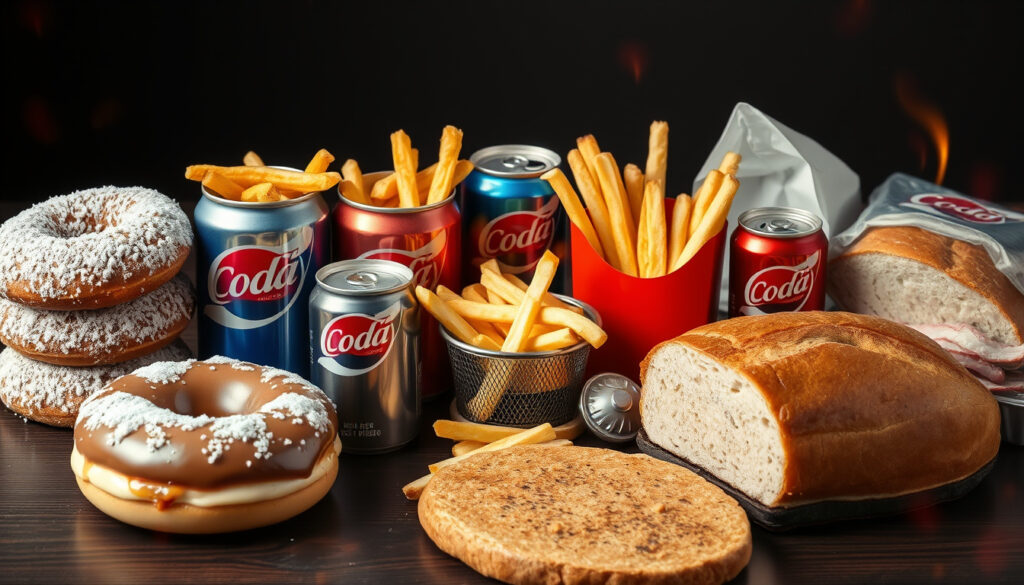
Red meat examples: Steak, hamburgers (Johns Hopkins Medicine) · Processed meats: Bacon, sausage, lunchmeat (Johns Hopkins Medicine) · Refined carbs: White bread, pastries (Harvard Health) · Fried foods: French fries (Harvard Health, Healthline) · Added sugars source: Soda, sweets (Healthline, FOODbible)
Quick snapshot
- Refined carbs cause inflammation (Harvard Health)
- Fried foods promote inflammation (Johns Hopkins Medicine)
- Soda triggers chronic inflammation (Harvard Health)
- Red and processed meats boost pro-inflammatory compounds (Johns Hopkins Medicine)
- Exact ranking of “top 10” varies by source
- Individual response differs based on gut microbiome and genetics
- Long-term CRP marker data limited for specific foods
- Harvard researchers raised alarms on trans fats in the early 1990s
- Anti-inflammatory diet guidance from Johns Hopkins remains ongoing
- 2026 saw renewed FOODbible coverage citing Harvard’s 5 worst foods
- Personalized nutrition based on inflammatory biomarkers
- Growing focus on omega-6 vs. omega-3 balance
- More clinical trials on food additive triggers like MSG
Five major institutions name the same culprits repeatedly: Harvard Health, Johns Hopkins Medicine, and the Arthritis Foundation converge on a clear cluster of pro-inflammatory foods. This cross-institutional agreement strengthens the evidence beyond any single source.
| Category | Specific triggers | Primary source |
|---|---|---|
| Top inflammatory category | Processed meats (bacon, sausage, hot dogs) | Johns Hopkins Medicine, Healthline |
| Omega-6 trigger | Corn, sunflower oils | Arthritis Foundation |
| Sugar source | Soda, candy, syrup | Harvard Health |
| Fried example | French fries, fried chicken | Harvard Health, Healthline |
| Trans fat sources | Margarine, microwave popcorn | Harvard Health |
| Refined carbs | White bread, pastries, white pasta | Harvard Health |
| Added fats | Full-fat dairy, pizza, cheese | National Cancer Institute data |
| Sodium overload | Deli meats, canned soups | GoodRx health guidance |
What are the 10 worst foods for inflammation?
Harvard identifies five main categories of foods that drive inflammation, while Johns Hopkins lists eight distinct groups. When these lists overlap, the evidence is strongest. The pattern is clear across tier-1 medical sources.
Red meat and processed meats
Red meat—including burgers, steaks, and other beef cuts—contains saturated fats that trigger adipose inflammation and worsen conditions like arthritis, according to the Arthritis Foundation. Processed meats amplify this effect: bacon, sausage, hot dogs, bologna, and jerky combine saturated fats with high sodium and preservatives, making them doubly inflammatory. Johns Hopkins Medicine lists both red and processed meats among its eight categories of pro-inflammatory foods. The evidence is particularly strong for processed red meats, while some research shows mixed results for unprocessed red meat alone.
- Steak and hamburgers: Saturated fat triggers systemic inflammation (Johns Hopkins Medicine research)
- Bacon and sausage: Salt and additives compound inflammatory response (Healthline medical review)
- Hot dogs and bologna: Highly processed with nitrates and sodium (Johns Hopkins Medicine)
Dr. Frank Hu, professor of nutrition and epidemiology at Harvard School of Public Health, notes that “some of the foods that have been associated with an increased risk for chronic diseases such as type 2 diabetes and heart disease are also associated with excess inflammation.” The connection runs through shared inflammatory pathways.
Refined carbohydrates
White bread, pastries, pasta made with white flour, and other refined carbs spike blood sugar rapidly. According to Harvard Health, these foods promote inflammatory responses because refined grains lack the fiber that slows absorption. Scientific American reports that refined carbohydrates may actually be the main driver of obesity and chronic inflammation—potentially trumping fats as the primary culprit. The American Journal of Clinical Nutrition cites research showing that refined sugars like fructose and sucrose release inflammatory cytokines directly.
Pizza and cheese represent the top saturated fat sources in the average American diet, per National Cancer Institute data—so even “healthy” choices can add up quickly if you’re not watching portions.
Fried foods
French fries, fried chicken, donuts, and other deep-fried items promote inflammation through two mechanisms: trans fats from repeated heating and the advanced glycation end products (AGEs) formed during frying. Johns Hopkins Medicine specifically names French fries as a key inflammatory food. Trans fats raise LDL cholesterol without boosting HDL, directly fueling systemic inflammation.
Sugary drinks and added sugars
Soda, candy, jelly, syrup, and sweet treats cause weight gain and inflammation simultaneously. Harvard Health cites sugar-sweetened beverages as major inflammation triggers linked to chronic diseases. The Arthritis Foundation notes that refined sugars release inflammatory cytokines—cells that amplify the inflammatory response throughout your body.
What are the 5 classic signs of inflammation?
The five classic signs of inflammation are redness, heat, swelling, pain, and loss of function. These represent your body’s immune response attempting to heal tissue damage or fight infection.
Common physical symptoms
Redness occurs when blood vessels dilate to deliver immune cells to the affected area. Heat follows as blood flow increases. Swelling results from fluid buildup as your body sends inflammatory mediators to the site. Pain is your nervous system’s warning signal that something needs attention.
Signs in joints and body
Loss of function happens when inflammation becomes severe enough to limit movement or use of the affected body part. In joints specifically, this manifests as stiffness, reduced range of motion, and difficulty performing everyday tasks. Johns Hopkins links chronic inflammation to osteoarthritis, where joint inflammation becomes a persistent, low-grade condition rather than an acute response.
These aren’t just discomfort signals—they’re markers of a biological process that, when chronic, contributes to heart disease, diabetes, and even Alzheimer’s. Johns Hopkins identifies five diseases directly linked to chronic inflammation.
How do you flush inflammation out of your body?
Reducing inflammation through diet involves two parallel strategies: eliminating triggers and adding anti-inflammatory compounds. Harvard advises focusing on overall healthy eating patterns rather than fixating on individual “bad” foods, but practical steps make the approach actionable.
Dietary changes
Start by removing or dramatically reducing the five main inflammatory food categories: processed meats, refined carbohydrates, fried foods, sugar-sweetened beverages, and foods high in trans fats or excess omega-6 fatty acids. Replace charcuterie with vegetable slices and hummus, as Johns Hopkins recommends. Choose whole grains over white bread and pasta. Opt for baked or grilled foods instead of fried.
- Swap white bread → whole grain bread or lettuce wraps
- Swap soda → water, herbal tea, or sparkling water with lemon
- Swap bacon → salmon or plant-based protein with omega-3
- Swap fries → roasted vegetables with olive oil
Lifestyle steps
Hydration supports your kidneys in flushing metabolic waste products. Regular physical activity helps regulate immune function and reduces inflammatory markers. Sleep quality matters too—poor sleep increases cortisol and inflammatory cytokines. Johns Hopkins promotes omega-3 fatty acids from fatty fish, walnuts, and canola oil as anti-inflammatory building blocks for your plate.
Harvard Health notes that many experimental studies demonstrate anti-inflammatory effects from specific food components—polyphenols in coffee and tea, omega-3s in fish, and antioxidants in colorful vegetables all contribute.
What drink kills inflammation?
Certain beverages actively combat inflammation rather than just avoiding it. Water remains foundational, but specific drinks offer additional anti-inflammatory benefits backed by research.
Best anti-inflammatory beverages
Water is your inflammation-fighting baseline—it supports every metabolic process and helps kidneys flush inflammatory waste products. Herbal teas, particularly green tea, contain polyphenols that modulate immune responses. Harvard Health notes that polyphenols in coffee may actually protect against inflammation, though individual tolerance varies.
- Water: Essential for flushing metabolic waste
- Green tea: Contains EGCG catechins with anti-inflammatory properties
- Herbal teas: Turmeric tea offers curcumin’s anti-inflammatory benefits
- Tart cherry juice: Anthocyanins reduce inflammatory markers
- Water with lemon: Vitamin C supports immune function
What you drink matters as much as what you eat. Sugary drinks and alcohol promote inflammation, while water and polyphenol-rich teas create an internal environment where inflammation struggles to persist.
Foods that cause inflammation in joints?
Joint-specific inflammation often manifests as arthritis, and certain foods disproportionately affect joint health. The Arthritis Foundation identifies specific ingredients that trigger or worsen joint inflammation. If you’re wondering about foods that cause inflammation in joints, you can learn more about $Objawy zapalenia spojówek.
Joint-specific triggers
Processed meats and omega-6-rich oils represent the strongest joint-specific triggers. Corn oil, soybean oil, and sunflower oil contain excess omega-6 fatty acids that, when unbalanced with omega-3s, promote pro-inflammatory chemicals. The Arthritis Foundation lists eight specific pro-inflammatory ingredients that worsen joint conditions, including saturated fats, trans fats, refined sugars, and excess sodium.
- Omega-6 oils: Corn, safflower, sunflower oils (unbalanced with omega-3)
- Processed deli meats: High sodium and preservatives
- Full-fat dairy: Saturated fats trigger adipose inflammation
- Refined sugars: Accelerate inflammatory cytokine release
Does chicken cause inflammation?
The relationship between chicken and inflammation depends heavily on preparation. Plain grilled chicken breast is relatively neutral. However, fried chicken falls squarely into the inflammatory category due to the cooking method and often-added breading. Processed chicken products—chicken nuggets, chicken sausages, deli chicken slices—introduce sodium, additives, and preservatives that promote inflammation. Lean, unprocessed chicken prepared without frying is generally not a significant inflammation driver.
Dr. Frank Hu of Harvard School of Public Health emphasizes that inflammation is an important underlying mechanism for chronic diseases—but the solution isn’t about any single food. Instead, “many experimental studies have shown that components of foods or beverages may have anti-inflammatory effects,” suggesting a balanced dietary approach works better than elimination alone.
“Some of the foods that have been associated with an increased risk for chronic diseases such as type 2 diabetes and heart disease are also associated with excess inflammation.”
— Dr. Frank Hu, Professor of nutrition and epidemiology, Harvard School of Public Health (Harvard Health)
“The connection between diet and inflammation is not surprising, since inflammation is an important underlying mechanism for the development of these diseases.”
— Harvard School of Public Health research summary (Harvard Health)
“Many experimental studies have shown that components of foods or beverages may have anti-inflammatory effects.”
— Dr. Frank Hu, Harvard School of Public Health (FOODbible)
The picture that emerges across major medical institutions is consistent: processed foods, refined sugars, fried items, and certain fats drive inflammation, while whole foods, omega-3s, and colorful vegetables help counter it. Harvard and Johns Hopkins agree on the core problem foods—and on the solution pattern.
Related reading: Is Canola Oil Bad for You · Is Coffee Good for You
health.harvard.edu, health.harvard.edu, foodbible.com, health.harvard.edu, hopkinsmedicine.org, hopkinsmedicine.org, goodrx.com, mdanderson.org
While steering clear of these triggers, embracing an anti-inflammatory diet outlined for New Zealanders can further curb chronic effects.
Frequently asked questions
What are 5 signs your body has inflammation?
The five classic signs are redness, heat, swelling, pain, and loss of function. These represent your immune system’s response to injury or infection. When chronic, inflammation may manifest as persistent joint stiffness, fatigue, or digestive issues rather than obvious acute symptoms.
Does chicken cause inflammation?
Plain grilled chicken is generally not inflammatory. Fried chicken or processed chicken products (nuggets, sausages, deli slices) are. The cooking method matters more than the protein itself. Lean, unprocessed chicken prepared without frying is a neutral to positive protein choice.
What foods cause inflammation and bloating?
Foods that cause both inflammation and bloating include processed foods high in sodium, sugar alcohols in sugar-free products, fried foods, and cruciferous vegetables (which are healthy but can cause gas). The bloating often signals gut inflammation from additives like MSG or emulsifiers in ultra-processed foods.
What foods cause inflammation in women?
Research doesn’t show major gender-specific differences in which foods cause inflammation, but hormonal fluctuations throughout the menstrual cycle can amplify inflammatory responses to dietary triggers. Women may notice increased joint pain or bloating during certain phases. The same core inflammatory foods—processed meats, refined carbs, fried foods, and sugary drinks—affect both genders.
What are anti-inflammatory foods?
Anti-inflammatory foods include fatty fish (salmon, mackerel, sardines), walnuts and almonds, olive oil, colorful vegetables (especially leafy greens and berries), turmeric, ginger, and green tea. Johns Hopkins specifically recommends omega-3 sources like fatty fish, walnuts, and canola oil as foundational anti-inflammatory choices.
Top 20 anti-inflammatory foods?
The top anti-inflammatory foods span categories: salmon, mackerel, sardines (omega-3s); blueberries, strawberries, cherries (antioxidants); spinach, kale, broccoli (leafy greens); walnuts, almonds, chia seeds (healthy fats); turmeric, ginger, garlic (anti-inflammatory compounds); olive oil (monounsaturated fats); and green tea (polyphenols).
Inflammatory foods to avoid?
Inflammatory foods to limit or avoid include processed meats (bacon, sausage, hot dogs), refined carbohydrates (white bread, pastries, white pasta), fried foods (French fries, fried chicken), sugar-sweetened beverages (soda, sweet tea), foods with trans fats (margarine, microwave popcorn), and excess omega-6 oils (corn oil, sunflower oil). Moderation is key—occasional consumption isn’t catastrophic, but habitual intake drives chronic inflammation.
More related posts
 National Gallery of Art: Masterpieces, Free Entry & Downloads
 Cast of Train Dreams: Joel Edgerton, Felicity Jones & Full List
 Alix Earle Dancing with the Stars: Place, Partner, Finale Recap
 A Como Esta El Dolar – Current Argentina Exchange Rates
 The Bad Guys 2 Showtimes: Ireland Cinemas, Tickets & Times
 Barry Keoghan Sabrina Carpenter Breakup: Age Gap & Health Facts
 Who Owns Fox News? Owners, Shareholders, and Facts
 Seahawks vs Atlanta Falcons Match Player Stats & Box Score 2025
