How to Make Caramelized Onions: Easy Step-by-Step Guide
There’s a moment in the kitchen when onions go from sharp and pungent to sweet and jammy—and that’s the magic of caramelization. With just a little patience and a pinch of salt, you can turn ordinary yellow onions into a rich, golden condiment in about 30 to 80 minutes.
Total cooking time: 30–80 minutes · Common fat used: Olive oil or butter · Ideal onion type: Yellow or sweet onions · Yield per large onion: About ½ cup caramelized · Salt usage: Pinch draws out moisture
Quick snapshot
- Low heat is essential to avoid burning (BBC Good Food (UK cooking authority))
- Salt helps release moisture and speeds browning (BBC Food (UK cooking authority))
- Cooking time varies by heat, pan size, and onion volume (Downshiftology (food blog))
- Butter adds flavor but has a lower smoke point than olive oil (A Flavor Journal (food blog))
- Optimal ratio of butter to oil for best flavor and texture
- Exact temperature range for ideal caramelization (no consensus across sources)
- Whether quick caramelized onions are truly comparable in flavor to slow-cooked
- Total cooking time: 30–80 minutes (BBC Good Food)
- Stir every 3–5 minutes for even cooking (Downshiftology)
- Onions are done when deep golden brown and sweet (BBC Good Food)
- Use on burgers, sandwiches, or pizza
- Store in an airtight container in the fridge for up to a week
- Freeze in small portions for later use
| Attribute | Details |
|---|---|
| Total cooking time | 30–80 minutes depending on heat and quantity |
| Ideal fat | Olive oil or combination of oil and butter |
| Onion type | Yellow or sweet onions preferred |
| Yield | 1 large onion yields ~½ cup caramelized |
| Salt use | Pinch of salt helps release moisture and speeds browning |
The table above summarizes the key variables, but the real skill lies in mastering the technique.
How do you caramelize onions?
Prepare the onions (slice thinly and evenly)
- Peel and slice yellow or sweet onions into thin, even half-moons.
- Uniform slicing ensures even cooking and consistent caramelization.
Cook low and slow over low heat
- Heat a tablespoon of olive oil in a large pan over low heat, then add the onions (BBC Food (UK cooking authority)).
- Add a generous pinch of salt to draw out moisture and aid browning (BBC Good Food (UK cooking authority)).
- Cook slowly for 30–80 minutes, stirring every 3–5 minutes to prevent sticking (Downshiftology (food blog)).
- If onions start to catch, add a splash of water (BBC Good Food).
Know when they’re done
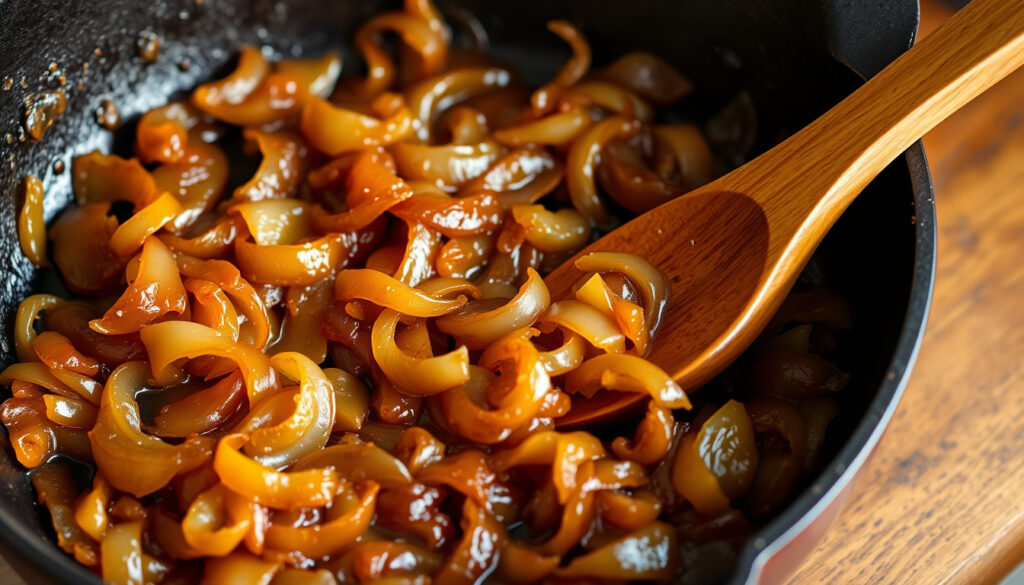
- Onions are ready when they turn a deep golden brown and taste sweet.
- Total time depends on heat, pan size, and quantity; expect 30–80 minutes (BBC Good Food).
Low heat and occasional stirring transform the natural sugars in onions, without any added sugar. The result is a deeply savory-sweet condiment that no quick method can fully replicate.
The implication: The core method is simple, but the time investment is the primary barrier to entry for most home cooks.
Should I caramelize onions with butter or olive oil?
Butter adds rich flavor but burns at lower temperatures
- Butter burns around 350°F (175°C); using it alone risks scorching before onions caramelize (A Flavor Journal (food blog)).
- Many recipe authors recommend olive oil for the base and butter for flavor (A Flavor Journal).
Olive oil has a higher smoke point and is more stable
- Olive oil is safe up to 375°F (190°C), making it more forgiving for long cooking.
- Taste.com.au uses olive oil for its caramelised onions recipe (Taste.com.au (Australian food magazine)).
Combine both: start with oil and add butter partway through
- Start with olive oil, then add a pat of butter after the first 10 minutes for flavor without burning.
One pattern across recipes: pure butter risks burning, pure olive oil lacks richness. The hybrid approach gets the best of both worlds.
| Fat | Smoke point | Flavor | Recommendation |
|---|---|---|---|
| Butter | ~350°F (175°C) | Rich, creamy | Use in combination; avoid alone for long cooking |
| Olive oil | ~375°F (190°C) | Neutral to fruity | Good base; use for most of the cooking |
| Butter + oil | Mix stabilizes | Rich + balanced | Best of both: start with oil, add butter later |
The pattern: The fat choice is a trade-off between flavor depth and heat stability, solved by a simple two-step addition.
Butter lovers get flavor without bitterness by adding it late. Olive oil purists get a clean, consistent caramelization. Your choice depends on whether you prioritize flavor depth or foolproof stability.
Do I need to add sugar when caramelizing onions?
Onions contain natural sugars that caramelize with low heat
- Yellow onions have about 5–6% natural sugar content, enough for deep caramelization.
- Slow cooking (30+ minutes) releases and caramelizes these sugars without added sugar (BBC Good Food).
Adding sugar speeds up browning for a shorter cook time
- Quick recipes often add brown sugar to reduce time to 20–30 minutes (Eat Like an Adult (food blog)).
- Brown sugar adds molasses flavor; white sugar may cause burning if not careful.
Classic recipes skip sugar entirely
- Serious Eats and BBC Good Food do not include sugar in their classic recipes (BBC Good Food).
- Eat Like an Adult’s no-sugar method relies on patience and salt.
The implication: sugar is a shortcut, not a necessity. For true caramelized flavor, let the onions’ own sugars do the work. If you’re short on time, a pinch of brown sugar in the last 10 minutes can help deepen the color.
What are common mistakes when caramelizing onions?
Using high heat
- High heat scorches the outside before the inside softens, creating bitterness.
- Low heat is essential for even cooking (BBC Good Food).
Not stirring frequently enough
- Stir every 3–5 minutes for even cooking and to prevent sticking (Downshiftology).
- Letting onions sit too long can cause burning.
Overcrowding the pan
- Too many onions trap steam instead of allowing browning.
- Use a wide pan to allow moisture to evaporate (The Mini Chef (food blog)).
Adding sugar too early
- Sugar added at the start can burn and create bitterness.
- If using sugar, add it in the last 10 minutes (Eat Like an Adult).
The most common pitfall is impatience. Turning up the heat to save time will produce burnt, bitter onions—not the sweet, jammy result you’re after.
The catch: Each mistake essentially boils down to trying to rush a process that requires gentle, consistent heat.
What is the best recipe for caramelized onions?
Classic slow recipe (BBC Good Food method)
- Heat oil, add sliced onions with salt, cook 30–40 minutes over low heat (BBC Good Food).
- Stir occasionally and add a splash of water if needed.
Extra-slow method (Love and Lemons)
- Use a cast iron skillet, cook 50–80 minutes over medium-low heat (Love and Lemons (food blog)).
- Stir every 10–15 minutes for deeper browning.
Quick recipe with brown sugar (Imigrant’s Table method)
- Add brown sugar to speed up browning to ~25 minutes (Eat Like an Adult).
- Good for burgers or when short on time.
Burger-focused version
- Cook onions until deep brown, then add a splash of balsamic vinegar in the last 5 minutes for depth (Taste.com.au).
- Optional: fresh rosemary or thyme for aromatic notes.
Heat the oil in a large deep frying pan over a low heat. Add the onions with a generous pinch of salt and cook slowly for 30–40 mins.
– BBC Good Food (UK cooking authority)
Heat the oil in a 12-inch cast iron skillet over medium heat. Add the salt, reduce the heat to medium-low and cook for 50 to 80 minutes.
– Love and Lemons (food blog)
Thinly sliced onions are cooked in olive oil until soft and then caramelised in sweet brown sugar and a dash of balsamic vinegar.
– Taste.com.au (Australian food magazine)
The implication: Recipe choice depends on your time and desired flavor profile, but the classic slow method remains the benchmark for quality.
Confirmed facts
- Low heat is essential to avoid burning (BBC Good Food)
- Salt helps release moisture and aids caramelization (BBC Food)
- Cooking time varies by heat setting, pan size, and volume of onions (Downshiftology)
- Butter adds flavor but has a lower smoke point than olive oil (A Flavor Journal)
What’s unclear
- Optimal ratio of butter to oil for best flavor and texture
- Exact temperature range for ideal caramelization (no consensus in provided sources)
- Whether quick caramelized onions are truly comparable in flavor to slow-cooked
For home cooks, the choice is clear: low heat and patience deliver the best results without added sugar. If you’re in a hurry, a touch of brown sugar and a wider pan can cut the time, but the classic slow method remains the gold standard.
For a detailed walkthrough, check out this step-by-step caramelized onion guide that covers butter versus oil and common pitfalls.
Frequently asked questions
Can I caramelize onions ahead of time?
Yes, caramelized onions keep well in the fridge for up to a week. Reheat gently in a pan or microwave.
How to store caramelized onions?
Store in an airtight container in the refrigerator. You can also freeze them in small portions for up to three months.
Can I caramelize frozen onions?
Yes, but they will release more water and take longer to brown. Thaw and drain excess moisture first for best results.
Do I need to peel onions before caramelizing?
Yes, peel off the outer papery skin and the first layer if it’s tough. Slice off the root and stem ends.
Can I use red onions for caramelizing?
Red onions work, but they have a milder flavor and less sugar, so they may not become as sweet as yellow onions.
How do I keep caramelized onions from burning?
Cook on low heat, stir frequently, and add a splash of water if the pan looks dry. Never leave them unattended for more than a few minutes.
Related reading
More related posts
 Trata on the River – Dining and Entertainment in Piermont
 What Is MCHC in Blood Test? Low, High, Normal Ranges
 How to Use Keyboard Shortcuts on Mac: Complete Guide (2025)
 AT&T Prepaid Customer Service: Phone Numbers & Chat
 When Does Gen Alpha Start? 2010 or 2012 Key Differences
 Blood Work Near Me: Cost, Walk-In & Vaping Impact in Ireland
 Canelo vs. Crawford: Date, Time, How to Watch on Netflix
 How Much Is a Cybertruck? 2026 Prices & Availability
