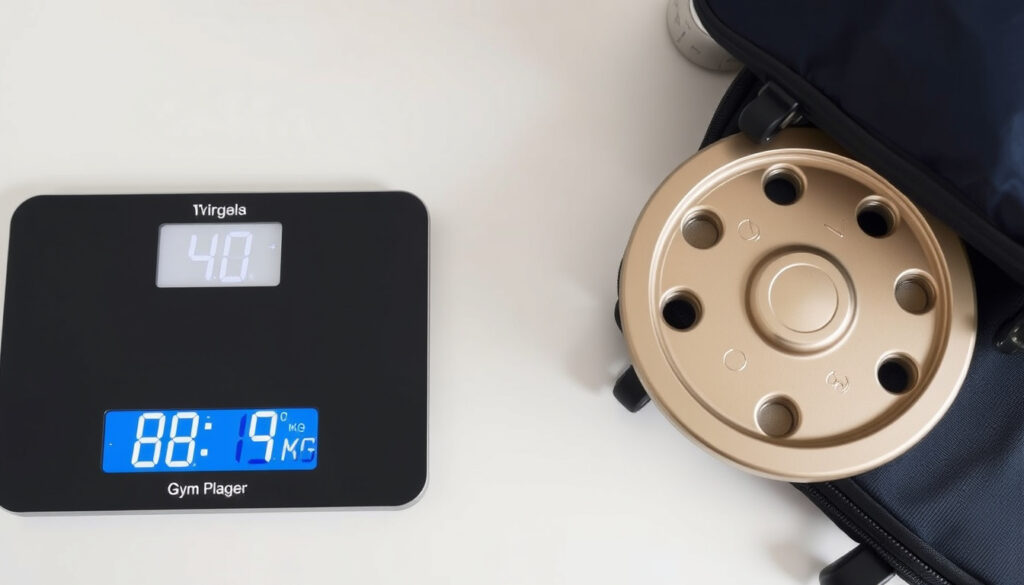
40 kg to lbs: Exact Conversion and Weight Context
Forty kilograms is one of those numbers that pops up constantly—pediatrician visits, luggage scales, fitness targets, even pet weight checks. But unless you’ve memorized the conversion factor, turning that into pounds (88.185, if you want the exact figure) usually means reaching for a calculator or a search bar. This article gives you the precise conversion, explains how to do it yourself, and adds the context most converters skip: what 40 kg actually means for a child, an adult, or anyone in between.
40 kg to pounds: 88.185 lb ·
40 kg to stones: 6.29 st ·
40 kg to ounces: 1,410.96 oz ·
40 kg to grams: 40,000 g
Quick snapshot
- 40 kg equals 88.185 lb using the standard factor (RapidTables conversion reference)
- 40 kg is 6.29 stones or 6 st 4.1 lb (The Calculator Site kg-to-stones chart)
- 40 kg = 40,000 g exactly (RapidTables conversion reference)
- Whether 40 kg is healthy depends on age, gender, height, and body composition—there is no single answer (NHS Scotland conversion chart)
- Conversion charts may round differently (6 st 4 lb vs. 6 st 4.2 lb) depending on the source (NHS Scotland conversion chart)
- International pound definition fixed by international agreement in 1959 at exactly 0.45359237 kg (RapidTables definition reference)
- The UK still uses stones and pounds for patient weight in clinical settings (York St John University nursing maths guide)
- Use exact conversion (88.185 lb) for precision; use rounded (88.2 lb) for everyday conversation
- For child weight assessment, consult age-specific growth percentiles rather than adult standards
Six conversion values, one pattern: the exact figure (88.185 lb) is what you get from the internationally agreed factor, while rounded versions (88.2 lb) work fine for casual use.
| Label | Value | Source |
|---|---|---|
| 40 kg to pounds | 88.185 lb | RapidTables conversion tool |
| 40 kg to stones (decimal) | 6.29 st | The Calculator Site chart |
| 40 kg to stones and pounds | 6 st 4.1 lb | The Calculator Site conversion |
| 40 kg to ounces | 1,410.96 oz | Derived from 88.185 lb × 16 oz/lb |
| 40 kg to grams | 40,000 g | Metric standard (1 kg = 1,000 g) |
| 40 kg rounded (everyday use) | 88.2 lb | The Calculator Site rounding note |
How many pounds is 40 kilograms?
Understanding the conversion factor
The relationship between kilograms and pounds is fixed by international agreement. One kilogram equals exactly 2.20462262185 pounds, a value defined by the RapidTables reference standard based on the 1959 international pound. One pound, in turn, is defined as exactly 0.45359237 kilograms.
Step-by-step conversion
To convert 40 kg to pounds, multiply 40 by 2.20462262185:
- 40 × 2.20462262185 = 88.184904874 lb
- Rounded to three decimal places: 88.185 lb
- For most practical purposes, rounding to one decimal (88.2 lb) is sufficient
The Symbolab calculator confirms this result, showing 40 × 2.205 = 88.1849 lb when using the simplified 2.205 factor. The difference between 2.20462262185 and 2.205 is negligible for everyday use—about 0.015 lb (7 g) over 40 kg.
Anyone doing precision work (pharmacy, shipping, engineering) should use the full factor. For daily use: multiply by 2.2 and add 1%—40 × 2.2 = 88, plus 0.88 = 88.88 lb. It’s not exact but gets you within 0.7 lb.
The pattern: the exact factor (2.20462262185) is the one to trust for official use. The rounded factors (2.205 or 2.2) are shortcuts that trade a little accuracy for speed.
What is 40 kg in stones and pounds?
Converting kilograms to stones
In the United Kingdom and Ireland, body weight is commonly reported in stones and pounds rather than kilograms alone. The conversion requires two steps: first convert kilograms to pounds, then divide by 14 (since one stone equals 14 pounds, per the York St John University nursing maths guide).
- 40 kg × 2.20462262185 = 88.185 lb
- 88.185 ÷ 14 = 6.2989 stones
- The whole number (6) is the stone component
- The remainder: 0.2989 × 14 = 4.18 lb, rounded to 4.1 lb
So 40 kg equals 6 stones and approximately 4.1 pounds. The The Calculator Site kg-to-stones chart lists 40 kg as 6.29 st (decimal) or 6 st 4.2 lb, while the NHS Scotland Community Pharmacy chart rounds 40 kg to 6 st 4 lb for clinical use. The difference between 4.1 lb and 4.2 lb comes from rounding conventions.
A UK parent seeing “6 st 4 lb” on a clinic chart and “6 st 4.2 lb” on an online calculator might worry about a discrepancy. The reality: both are legitimate roundings of the same value—the variation is smaller than a typical daily weight fluctuation.
Converting remaining kilograms to pounds
For values that fall between stone boundaries, the same two-step method applies. For comparison, 39 kg equals 6.14 st or about 6 st 2 lb, and 41 kg equals 6.46 st or about 6 st 6 lb, according to The Calculator Site’s adjacent values.
Is 40 kg ok for a 12 year old?
Weight percentiles for 12-year-olds
This is one of the most common questions parents ask when they see 40 kg on the scale. According to standard growth reference data, the average weight for a 12-year-old girl at the 50th percentile is approximately 41.5 kg, and for a boy of the same age, approximately 40.5 kg. A weight of 40 kg therefore falls within the broad normal range for many 12-year-olds—close to the median for boys and slightly below it for girls.
The NHS Scotland Community Pharmacy chart, designed for clinical weight recording, includes 40 kg as a reference point for paediatric use, indicating it is a commonly encountered weight in healthcare settings.
When to consult a pediatrician
The CDC defines underweight as weight below the 5th percentile for a child’s age and sex. Where 40 kg falls depends heavily on the child’s height and individual growth trajectory. A tall 12-year-old at 40 kg may be perfectly healthy, while a shorter child at the same weight could be closer to the underweight threshold.
The implication: weight alone is not a reliable health indicator for children. Paediatricians assess growth using BMI percentiles that account for height, age, and sex, not just the number on the scale.
What is the average weight of a 12-year-old?
Average weight by gender
Growth reference data show that average weights rise steadily through adolescence. At age 12, the 50th percentile for girls is about 41.5 kg and for boys about 40.5 kg, meaning 40 kg sits within the typical range. By age 13, these averages climb to roughly 45.5 kg for girls and 44 kg for boys, reflecting the onset of puberty and associated growth spurts.
Factors affecting weight
Several factors influence where a child’s weight lands on the growth chart:
- Height: Taller children naturally weigh more
- Puberty timing: Early or late onset shifts weight percentiles significantly
- Muscle mass vs. body fat: Active children may have higher weight from lean tissue
- Ethnic background: Growth patterns vary across populations
The York St John University nursing guide emphasises that weight conversion accuracy matters in clinical settings, but the interpretation of that weight requires a full patient assessment.
The pattern: 40 kg is neither alarmingly low nor worryingly high for a 12-year-old—it is right in the middle of the distribution. The context of height and individual growth pattern matters far more than the raw number.
How much is 1kg to 1 pound?
The exact conversion factor
The foundation of every kilogram-to-pound conversion is the internationally agreed factor: 1 kilogram = 2.20462262185 pounds. Conversely, 1 pound = 0.45359237 kilograms, as stated by the RapidTables conversion definition. This factor was established by international agreement in 1959 and is the basis for all official weight conversions worldwide.
Quick mental math
For rapid estimation, two shortcuts are commonly taught:
- Multiply by 2.2: 40 × 2.2 = 88 lb (error: −0.185 lb)
- Multiply by 2.205: 40 × 2.205 = 88.2 lb (error: +0.015 lb)
Several YouTube explainers demonstrate the 2.2 mental method for quick estimates, while more precise online tutorials use 2.205 for a closer approximation (video walkthrough example).
The pattern: the shortcuts are fine for conversation, but the exact factor matters for shipping, medicine, and any context where a 0.2% error adds up.
How to convert 40 kg to pounds step by step
Follow these four steps to convert any weight from kilograms to pounds—and to stones and pounds if needed.
- Write down the weight in kilograms. For this example: 40 kg.
- Multiply by the exact conversion factor. Use 2.20462262185 for precision, or 2.205 for near-exact results: 40 × 2.20462262185 = 88.1849 lb.
- Round as needed. 88.185 lb (three decimals) is the standard precise figure. Round to 88.2 lb for everyday use.
- For stones and pounds: divide the total pounds by 14. 88.185 ÷ 14 = 6.2989. The integer (6) is the stone count. Multiply the remainder by 14: 0.2989 × 14 = 4.18 ≈ 4.1 lb. So 40 kg = 6 st 4.1 lb.
The York St John University nursing maths factsheet teaches exactly this two-step method for clinical weight conversion, confirming its use in UK healthcare education.
Confirmed facts vs. what remains unclear
Confirmed facts
- 40 kg equals 88.185 lb when converted using the international standard factor of 2.20462262185 (RapidTables)
- 40 kg is approximately 6.29 stones, or 6 stones and 4.1 pounds (The Calculator Site)
- One stone equals exactly 14 pounds (York St John University)
- The UK healthcare system uses stones and pounds for patient weight recording (NHS Scotland)
- 1 kg = 2.20462262185 lb and 1 lb = 0.45359237 kg by international definition (RapidTables standard reference)
What remains unclear
- Whether 40 kg is a healthy weight depends entirely on age, height, gender, and body composition—there is no universal yes-or-no answer
- Different conversion charts may show 40 kg as 6 st 4 lb, 6 st 4.1 lb, or 6 st 4.2 lb depending on rounding conventions (NHS Scotland vs. The Calculator Site)
- Simplified occupational health charts may use coarse rounding that deviates from the standard conversion (Occupational Health conversion note)
“The 50th percentile weight for a 12-year-old girl is approximately 41.5 kilograms, and for a boy of the same age, approximately 40.5 kilograms.”
— CDC Growth Charts (standard paediatric reference data)
“Weight-for-age reference standards provide a baseline for assessing child growth across populations, but individual assessment requires consideration of height and pubertal stage.”
— WHO Child Growth Standards
For parents tracking a child’s weight against these benchmarks, 40 kg sits squarely in the typical range for a 12-year-old. The key is not to fixate on the number but to look at the overall growth pattern—whether the child is following their own percentile curve over time.
Related reading: **1 Mile to Km Converter: Exact 1 mi = 1.609344 km** · **How Many Yards in a Mile? Conversion, History, and Examples**
Frequently asked questions
How do I convert 40 kg to pounds step by step?
Multiply 40 by the conversion factor 2.20462262185. The result is 88.1849, which rounds to 88.185 lb. For a quick estimate, multiply by 2.2 to get 88 lb, then add about 0.2 lb for a closer approximation.
What is the BMI for a person weighing 40 kg?
BMI depends on height. For example, at 150 cm (4’11”), 40 kg gives a BMI of approximately 17.8 (underweight). At 170 cm (5’7″), the same weight gives a BMI of about 13.8 (severely underweight). For children, BMI is assessed using age- and sex-specific percentiles rather than adult thresholds.
Is 40 kg underweight for a 5’5″ adult?
Yes. At 165 cm (5’5″), a weight of 40 kg yields a BMI of approximately 14.7, well below the WHO underweight threshold of 18.5. Anyone at this weight should consult a healthcare provider for a full nutritional assessment.
How many kilograms are in a pound?
One pound equals exactly 0.45359237 kilograms, as defined by international agreement in 1959. To convert pounds to kilograms, multiply the pound value by 0.45359237.
What is the difference between a kilogram and a pound?
A kilogram is the base SI unit of mass, defined by the International System of Units. A pound is an imperial unit used primarily in the United States and the United Kingdom. One kilogram equals approximately 2.205 pounds. Kilograms are used for most scientific and global trade measurements, while pounds remain common in US and UK daily life.
Why do some countries use kilograms while others use pounds?
Countries that follow the metric system (most of the world) use kilograms as the standard unit of mass. The US and a few other territories continue to use imperial units like pounds for everyday measurement due to historical and legislative inertia. The UK uses a hybrid system—kilograms for most official purposes but stones and pounds for body weight.
For parents converting a child’s weight at home, the takeaway is clear: use the exact conversion (88.185 lb) when precision matters, but focus on the growth trajectory and paediatric guidance rather than the number itself. For adults, 40 kg is well below typical healthy weight ranges except for very short individuals, and professional medical advice is warranted.
More related posts
 The Idea of You: True Story, Age Gap, Movie Guide
 Who Owns Fox News? Owners, Shareholders, and Facts
 S&P 500 Today: Up 1.20% to 7,126.06 Amid US Trade Tariffs
 Best LEGO Sets for Adults 2024 – Top Picks & Guide
 How Long Is a Fortnight? Definition, Origin, and Common Confusions
 Is Taylor Swift Engaged? Confirmed News and Details
 How to Contact Amazon Customer Service: Phone, Chat, Email
 Ax Throwing Near Me: Ireland Venues, Prices & Safety
