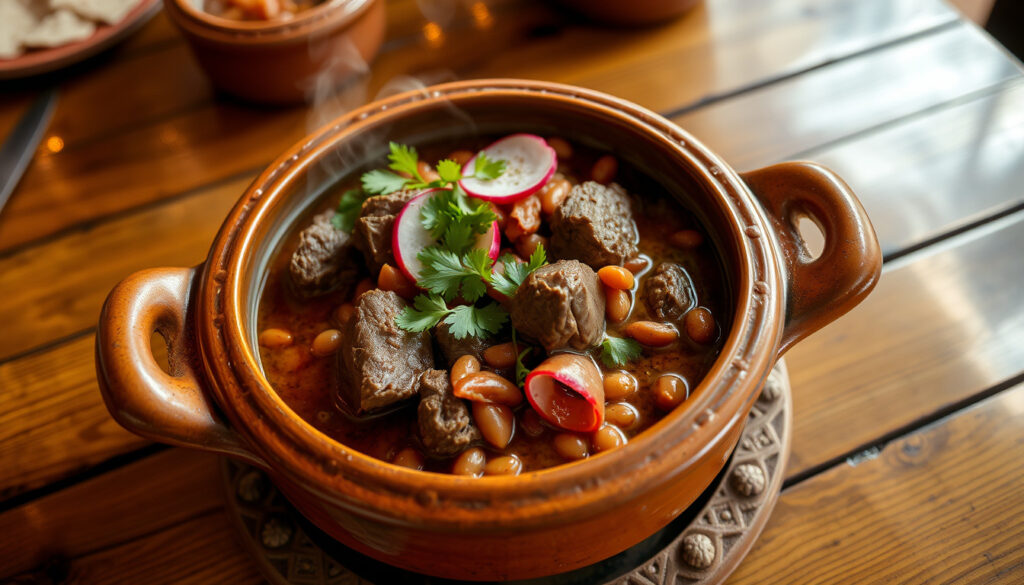
Carne en su Jugo: Authentic Jalisco Beef Stew
There’s something deeply satisfying about a beef stew that tastes like it’s been simmering for hours, but really comes together in just over an hour. Carne en su jugo, a traditional Mexican beef stew from Jalisco, is built on beef browned in bacon fat and finished in a bright tomatillo-serrano sauce. If you’ve ever wanted to recreate that soulful bowl at home, this guide walks you through the authentic preparation with the technique that makes it work.
Origin: Jalisco, Mexico ·
Main protein: Flank steak or beef sirloin ·
Key flavor base: Tomatillo-serrano sauce ·
Traditional garnish: Charred green onions, cilantro, lime ·
Common side: Pinto beans and crispy bacon ·
Cooking method: Simmered in its own juices
Quick snapshot
- Originates from Jalisco, Mexico (Maricruz Avalos Kitchen Blog (Jalisco home cooking specialist))
- Uses tomatillo-serrano sauce as base (Pina en la Cocina (authentic Mexican recipe site))
- Bacon fat is used for browning the beef (Mama Maggie’s Kitchen (Mexican home cooking blog))
- Exact historical origin date is not documented
- Whether pinto beans are always authentic or a modern addition
- Total cooking time: approximately 1–1.5 hours (Maricruz Avalos Kitchen Blog)
- Serve with charred green onions, diced onion, cilantro, and lime (Maricruz Avalos Kitchen Blog)
Carne en su jugo is one of those dishes where the difference between good and great is in the technique — and the single most important step is browning the beef in rendered bacon fat before adding any liquid. That one move builds a deep savory foundation that no store-bought salsa verde can replicate.
Before we get into the cooking, here are the essential facts about this Jalisco classic.
Stews don’t get much more direct than this: beef, bacon, tomatillos, and time.
| Attribute | Detail |
|---|---|
| Dish type | Stew / soup |
| Region of origin | Jalisco, Mexico |
| Main protein | Beef (flank steak or sirloin) |
| Cooking time | Approximately 1–1.5 hours |
| Common side | Pinto beans, bacon, tortillas |
The implication: Carne en su jugo sits in a sweet spot between a hearty soup and a saucy stew — and that texture is exactly what the technique aims to preserve.
What is carne en su jugo?
Origin and cultural significance
- Carne en su jugo is a traditional Mexican beef stew from the state of Jalisco, particularly associated with Guadalajara (Maricruz Avalos Kitchen Blog (Jalisco home cooking specialist)).
- The dish is built around beef cooked in its own juices (hence the name) and finished with a tomatillo-based sauce (Allrecipes (popular recipe database)).
- It’s often described as a stew or soup-like preparation, not a dry meat dish (Allrecipes).
The implication: Carne en su jugo sits in a sweet spot between a hearty soup and a saucy stew — and that texture is exactly what the technique aims to preserve.
Key characteristics of the dish
- The sauce uses tomatillos and serrano chiles rather than jalapeños, giving it a bright, spicy salsa verde profile (Pina en la Cocina (authentic Mexican recipe site)).
- Bacon fat is used for browning the beef, which adds richness (Mama Maggie’s Kitchen (Mexican home cooking blog)).
- Pinto beans and crispy bacon are commonly served alongside or stirred in (Maricruz Avalos Kitchen Blog).
What this means: The interplay of smoky bacon, bright tomatillo, and tender beef defines the dish — and each component has its own role in the layering of flavor.
What are the main ingredients in carne en su jugo?
Essential ingredients
- Beef: Flank steak or sirloin are traditional, though some home cooks use chuck roast (Allrecipes (popular recipe database)).
- Tomatillos and serrano chiles — cooked until olive green, then blended with onion, garlic, cilantro, and broth (Pina en la Cocina (authentic Mexican recipe site)).
- Bacon — rendered separately, then returned to the pot for flavor (Mama Maggie’s Kitchen (Mexican home cooking blog)).
- Pinto beans — either added to the pot or served on the side (Maricruz Avalos Kitchen Blog (Jalisco home cooking specialist)).
The pattern: Every ingredient pulls double duty — the bacon adds fat for browning and a smoky note, while the tomatillos provide acidity to balance the richness.
Optional additions and substitutions
- Some recipes add bouillon or broth to deepen the cooking liquid (Mama Maggie’s Kitchen).
- Chuck roast can replace flank steak for a more forgiving cut that breaks down with longer simmering (Allrecipes).
- A vegan version substitutes mushrooms or jackfruit while keeping the tomatillo sauce and pinto beans (Mexican Made Meatless (plant-based Mexican food blog)).
The trade-off: Stick with flank steak if you want the quick-cooking, sliceable texture; choose chuck if you prefer fork-tender shreds after a longer simmer.
How do you make carne en su jugo?
Step-by-step cooking instructions
- Render the bacon — dice and cook until crispy, then set aside. Reserve the fat in the pot.
- Brown the beef — cut flank steak or sirloin into small cubes and sear in the bacon fat until deeply browned. Don’t crowd the pot (Mama Maggie’s Kitchen (Mexican home cooking blog)).
- Prepare the tomatillo sauce — simmer tomatillos and serrano chiles in water until they turn olive green (about 8–10 minutes). Blend with onion, garlic, cilantro, and a splash of cooking liquid (Pina en la Cocina (authentic Mexican recipe site)).
- Combine and simmer — pour the blended sauce over the browned beef. Add water or broth to reach a stew-like consistency. Return the bacon to the pot. Cover and simmer for 20–60 minutes, depending on the cut (Maricruz Avalos Kitchen Blog (Jalisco home cooking specialist); Mama Maggie’s Kitchen).
- Finish and serve — stir in cooked pinto beans if using. Ladle into bowls and top with charred green onions, diced white onion, fresh cilantro, and a squeeze of lime (Maricruz Avalos Kitchen Blog).
Many home cooks try to skip the browning step or boil the beef directly in the sauce, thinking it will save time. What actually happens: the meat releases its juices but never develops the deep caramelized flavor that makes this stew so distinct. Don’t skip the sear — that 5-minute step is the difference between “good” and “I need this recipe.”
Tips for achieving the right consistency
- The stew should be brothy but not watery — the sauce should coat the meat lightly. If it’s too thin, simmer uncovered for a few minutes to reduce.
- If using flank steak, slice the raw meat against the grain into bite-sized cubes. This ensures tenderness even with a relatively short simmer (Maricruz Avalos Kitchen Blog).
- Let the stew rest for 10 minutes off the heat before serving — the flavors meld and the liquid thickens slightly.
The pattern: Patience in the browning and precision in the sauce are the two levers that separate a good stew from a great one.
What is the difference between carne en su jugo and other Mexican stews?
Carne en su jugo vs. birria
- Birria uses dried chiles (guajillo, ancho) as its base, while carne en su jugo relies on fresh tomatillos and serranos (Maricruz Avalos Kitchen Blog).
- Birria is often cooked with goat or lamb; carne en su jugo is always beef (Allrecipes).
- Birria is typically served as a dip for consomé or as a quesabirria filling, while carne en su jugo is a bowl-style stew.
Carne en su jugo vs. caldo de res
- Caldo de res is a vegetable-heavy beef soup with chunks of corn, cabbage, chayote, and potatoes — the broth is clear and seasoned simply (Allrecipes).
- Carne en su jugo is thicker and relies on the pureed tomatillo sauce as its primary liquid, not a clear broth.
- Caldo de res features large bone-in beef cuts; carne en su jugo uses smaller cubed lean cuts.
The pattern: Both birria and caldo de res have their own fans, but carne en su jugo occupies a unique space — quick enough for a weeknight, complex enough for a Sunday dinner.
What should I serve with carne en su jugo?
Traditional accompaniments
- Charred green onions — grilled or pan-charred until slightly blackened, then sliced into the broth (Maricruz Avalos Kitchen Blog (Jalisco home cooking specialist)).
- Warm corn tortillas — essential for dipping and scooping (Maricruz Avalos Kitchen Blog).
- Fresh garnishes — diced white onion, chopped cilantro, sliced radishes, and lime wedges (Maricruz Avalos Kitchen Blog).
- Pinto beans — either mixed into the stew or served on the side.
Modern serving suggestions
- Serve over rice for a heartier meal — though this is less traditional in Jalisco.
- Add sliced avocado as a cool, creamy counterpoint to the spicy broth.
- Pair with a crisp Mexican lager or a cold horchata to balance the heat.
The trade-off: Traditional purists will stick with just tortillas and garnish; modern cooks can stretch the bowl further with rice or extra beans. Both are valid — the stew’s flavor holds up either way.
What people are saying about carne en su jugo
“The traditional way to serve this stew is with charred green onions, diced white onion, fresh cilantro, and limes.”
— Maricruz Avalos Kitchen Blog (Jalisco home cooking specialist)
“The beef is browned in bacon fat and then simmered in its own juices with a tomatillo sauce until tender.”
— Isabel Eats (popular Mexican food blog)
“Simmering the tomatillos until they turn from bright green to olive green before blending is key to the sauce’s depth.”
— Pina en la Cocina (authentic Mexican recipe site)
In the end, carne en su jugo is a dish that rewards patience in the browning and precision in the sauce. For the home cook looking to bring a taste of Jalisco to the dinner table, the choice is clear: take the extra 10 minutes to sear the beef in rendered bacon fat and char the green onions — or settle for a stew that’s merely good instead of unforgettable.
Frequently asked questions
Can I make carne en su jugo ahead of time?
Yes — the stew actually tastes better the next day as the flavors meld. Store in an airtight container in the refrigerator for up to 3 days. Reheat gently on the stovetop, adding a splash of water or broth if it thickens too much.
What is the best way to reheat carne en su jugo?
Reheat in a pot over medium-low heat, stirring occasionally. Avoid boiling, as that can toughen the beef. If using a microwave, cover the bowl and heat in 1-minute intervals.
Can I use chicken instead of beef in carne en su jugo?
You can, but it won’t be traditional. Chicken thighs would work best — brown them well in the bacon fat and adjust simmering time to about 20 minutes after adding the sauce, until cooked through.
Is carne en su jugo spicy?
It has a moderate level of heat from the serrano chiles. For a milder version, remove the seeds from the serranos before blending, or replace them with jalapeños. For more heat, add an extra serrano or leave the seeds in.
How do I store leftover carne en su jugo?
Let it cool completely, then transfer to an airtight container. Refrigerate for up to 3 days, or freeze for up to 3 months. Thaw overnight in the fridge before reheating.
Can I make carne en su jugo vegetarian?
Yes — a vegan adaptation by Mexican Made Meatless (plant-based Mexican food blog) uses a tomatillo sauce, pinto beans, and plant-based protein like mushrooms or soy curls while keeping the same garnishes.
What type of pot is best for cooking carne en su jugo?
A heavy-bottomed Dutch oven or a thick stainless-steel pot works best. It retains heat evenly and allows the meat to brown properly without burning the fond. Avoid non-stick for browning — you won’t get the same crust.
More related posts
 LA Clippers vs Miami Heat Match Player Stats: Dec 1 Box Score
 55 kg to lbs – Exact Conversion to 121.25 Pounds
 How to Contact Amazon Customer Service: Phone, Chat, Email
 Bed Bug Bite Symptoms: Identification & Treatment
 Is AT&T Down? Check Outage Status & Fix Issues
 Elizabeth Banks Movies and TV Shows: Full Filmography
 Chick-fil-A Sauce UK: Buy, Recipe, Aldi Dupe Guide
 Canyon Lake Water Level: Current, History & 2026 Forecast
