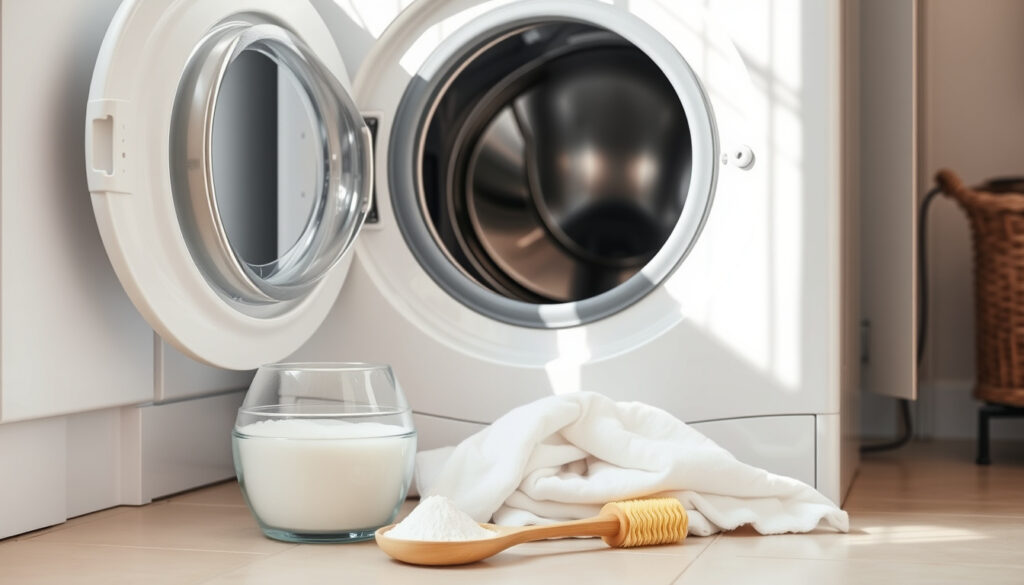
How to Clean a Washing Machine: Vinegar & Baking Soda Guide
You open your washing machine and catch a musty smell. A buildup of detergent residue, mold, and hard water minerals is the usual culprit. The good news: a deep clean with two kitchen staples — white vinegar and baking soda — can restore your machine without harsh chemicals. Here’s how to do it right, whether you have a front-loader or a top-loader.
Recommended cleaning interval: Every 1–3 months (Whirlpool official guide) ·
Most common odor cause: Mold in rubber door seal (Hotpoint support blog) ·
Minimum temperature for effective cleaning: 60°C (140°F) hot cycle (The Home Depot)
Quick snapshot
- Vinegar and baking soda clean effectively (Apartment Therapy)
- Empty hot cycle with vinegar is safe for front-loaders (The Home Depot)
- Whether vinegar damages rubber seals with repeated use (Purdy & Figg)
- Optimal ratio of vinegar to baking soda for cleaning (Apartment Therapy)
- After cleaning, run an empty rinse cycle to remove residue (Apartment Therapy)
- Leave door open to air dry and prevent mold regrowth (Lemon Lavender & Laundry)
Four key facts, one pattern: the most stubborn problem — odor — stems from neglected seals and drawers. Addressing those directly cuts cleaning time in half.
| Fact | Value |
|---|---|
| Most common cause of washer odor | Mold growth in rubber door seal (Hotpoint) |
| Ideal cleaning frequency | Every 1–3 months (Whirlpool) |
| Maximum vinegar amount for cleaning | 2 cups (500 ml) (Apartment Therapy) |
| Temperature for effective cleaning | 60°C (140°F) or hot cycle (The Home Depot) |
The pattern: these values give you a precise target for every cleaning session.
What is the best way to clean a washing machine?
The answer depends on your machine type and your preference for natural versus chemical cleaners. Front-loaders and top-loaders require different approaches, but both benefit from a hot cycle with a cleaning agent.
Using vinegar and baking soda
- For front-load washers, spray white vinegar on the rubber gasket and wipe it with a damp cloth before starting the cleaning cycle (Apartment Therapy).
- Pour two cups of white vinegar into the detergent dispenser and run a hot wash cycle. After that cycle finishes, sprinkle ½ cup of baking soda directly into the drum and run a second hot cycle (Apartment Therapy).
- For top-load washers, add one quart of white vinegar to the drum after starting a hot wash cycle for one minute, then let it soak for one hour while scrubbing the exterior and agitator (Apartment Therapy).
- Run a second hot cycle with one cup of baking soda after the vinegar soak (Apartment Therapy).
“For a quick scrub, mix vinegar and baking soda into a paste after their reaction for manual cleaning of drum, door, and drawer.”
Using two separate cycles — one with vinegar, one with baking soda — prevents the reaction from forming a paste that can clog pipes. Running them in sequence delivers the deodorizing power of baking soda without the gunk.
Using commercial washing machine cleaners
Tablets and powders designed specifically for washing machines are available from brands like Affresh and OxiClean. They typically contain enzymes and surfactants that break down residue more aggressively than vinegar alone. However, they cost more and often contain fragrances that can irritate sensitive skin.
“Whirlpool advises using a hot, longest cycle with a cleaning tablet or vinegar for optimal results.”
Whirlpool support guide
Self-cleaning cycle
Many modern front-load washers include a dedicated self-cleaning or “Tub Clean” cycle. Samsung (Samsung official) and LG (LG support) recommend using this cycle with a cleaning tablet or diluted bleach every 1–2 months. Check your machine’s manual to confirm.
The implication: if your washer has a self-clean function, it’s the easiest route. For washers without one, the vinegar-and-baking-soda method is a close second.
How do I do a deep clean on my washing machine?
A deep clean goes beyond a simple hot cycle — it targets every component where grime hides. Gather white vinegar, baking soda, a microfiber cloth, and an old toothbrush.
Step 1: Clean the drum with hot water
Set the machine to the hottest, longest cycle (usually “cotton” or “heavy duty”). Add two cups of white vinegar to the detergent drawer (The Home Depot). Let the cycle run for its full duration. This step breaks down hard water deposits and kills mold.
Step 2: Clean the detergent drawer
Remove the drawer completely if possible. Soak it in a basin with hot water and ½ cup of baking soda for 15 minutes. Scrub all compartments with a toothbrush, rinse, and dry thoroughly (Lemon Lavender & Laundry).
Step 3: Clean the rubber door seal
Pull back the rubber gasket on a front-loader — you’ll likely find trapped debris and dark mildew. Spray full-strength white vinegar on the seal and wipe with a damp cloth. Use a toothbrush for crevices (Apartment Therapy).
Step 4: Clean the filter
Unplug the machine before removing the filter cover (typically at the bottom front). Clean removable parts like the filter and agitator in a solution of 2 cups vinegar, ¼ cup baking soda, and ¼ cup water (The Home Depot).
Always unplug the machine before accessing the filter. Never mix vinegar and bleach — the combination produces toxic chlorine gas (The Home Depot).
The trade-off: skipping the filter and seal cleaning means odors will return within weeks. A full deep clean every 3 months keeps the machine fresh.
Can I run my washing machine empty to clean it?
Yes — in fact, that’s the standard recommendation. Running an empty cycle with a cleaning agent prevents detergent residue from depositing back onto clothes.
When to use an empty cycle
- Routine maintenance: every 1–3 months (Whirlpool).
- After a smelly load: run a hot empty cycle immediately.
- Before storing the machine: an empty clean cycle prevents mold during disuse.
How to add cleaning agents to an empty machine
For front-loaders, pour vinegar into the detergent dispenser. For top-loaders, add directly to the drum after filling starts. Ensure no clothes are inside — the machine must be empty to allow full circulation (The Home Depot).
Risks of running empty
Running empty with too much vinegar (more than 2 cups) can cause excessive foam that leaks onto the floor. Also, if you use bleach in an empty cycle, ensure the room is ventilated.
The catch: an empty cycle cleans only the internal drum. Without manual cleaning of the seal, drawer, and filter, residue remains.
Can I put vinegar and baking soda in my washing machine to clean it?
Yes, but with important precautions. Vinegar is acidic and can degrade rubber seals over time if used too often. Baking soda is safe but may leave a white residue if not fully dissolved.
Proper amounts to use
- Vinegar: up to 2 cups (500 ml) per cycle (Apartment Therapy).
- Baking soda: ½ to 1 cup per cycle (Apartment Therapy).
Step-by-step process for vinegar and baking soda
- Run a hot cycle with vinegar only.
- When the cycle completes, open the door and sprinkle baking soda into the drum.
- Run a second hot cycle.
- Wipe down the door seal and drawer after completion.
Potential damage to rubber seals and components
Repeated exposure to vinegar (weekly for months) may deteriorate the rubber gasket. Manufacturers like Hotpoint recommend limiting vinegar cleaning to once per month. For frequent cleaning, use a commercial washer cleaner instead.
If your door seal starts feeling sticky or develops cracks, stop using vinegar and switch to a dedicated cleaner or diluted citric acid.
Where do I put white vinegar in my washing machine to clean it?
The placement depends on your machine type and the depth of cleaning you want.
Into the detergent drawer
For routine cleaning, pour vinegar into the detergent compartment. This allows it to disperse gradually through the cycle, reaching both the drum and the drawer itself (Apartment Therapy).
Directly into the drum
For a deep clean on a top-loader, add vinegar directly to the drum after the machine fills with water. This gives a higher concentration against mold on the agitator (The Home Depot).
In the fabric softener compartment
Some guides suggest putting vinegar in the softener dispenser, but this is less effective because the compartment releases liquid only during the rinse cycle. Stick to the detergent drawer or drum for the main cleaning action.
The pattern: drawer is best for routine, drum for heavy-duty. Never mix vinegar with bleach — the drawer is a common mixing point if both are added simultaneously.
Clarity check
Confirmed facts
- Vinegar and baking soda can clean washing machine effectively (Apartment Therapy)
- Running an empty hot cycle with vinegar is safe (The Home Depot)
- Vinegar breaks down hard water deposits and kills mold (Lemon Lavender & Laundry)
- Baking soda absorbs odors (Lemon Lavender & Laundry)
What’s unclear
- Whether vinegar damages rubber seals with repeated use (Purdy & Figg)
- Optimal ratio of vinegar to baking soda for cleaning (Apartment Therapy)
- Effectiveness of vinegar versus citric acid for rust removal
Expert perspectives
“Haven Polich, product manager at ASKO, recommends wiping down interior, exterior, detergent and fabric softener compartments after cycles and leaving door open to air dry.”
Apartment Therapy interview
“For top-load washers, add one quart of white vinegar to the drum after starting a hot wash cycle for one minute, then soak for one hour while scrubbing exterior and agitator.”
Apartment Therapy guide
For anyone managing a household, the choice is clear: either commit to a 60-minute deep clean every three months using vinegar and baking soda, or risk replacing a seal or dealing with lingering smells that re-infect your laundry. Hotpoint suggests that with regular care, a washing machine can last its full 10–13 year lifespan without developing mold issues.
Frequently asked questions
How often should I clean my washing machine?
Every 1–3 months, depending on usage. If you use fabric softener or liquid detergent frequently, clean more often (Whirlpool).
Can I use bleach to clean my washing machine?
Yes, but never mix bleach with vinegar or ammonia. Use ½ cup of bleach in an empty hot cycle once every 3 months. Avoid bleach on rubber seals as it can cause cracking (The Home Depot).
How do I clean the washing machine filter?
Unplug the machine, open the filter cover at the bottom front, and remove debris. Soak the filter in a vinegar-baking soda solution for 15 minutes, then rinse and replace (The Home Depot).
Why does my washing machine smell bad?
Mold and mildew in the rubber door seal, detergent drawer, or drain hose are the most common causes. Low-temperature washes and leaving the door closed after cycles promote growth (Hotpoint).
What is the best washing machine cleaner to buy?
Affresh tablets and Tide Washing Machine Cleaner are highly rated. For a natural option, white vinegar and baking soda are cost-effective and effective against odors (Apartment Therapy).
Can I clean my washing machine with citric acid?
Yes, citric acid is effective against limescale and is gentler on rubber seals than vinegar. Use 2 tablespoons dissolved in hot water and run an empty cycle. Available at grocery stores or online.
Related reading: Whirlpool Refrigerator Water Filter Replacement Guide · Boneless Skinless Chicken Thighs in Oven: Quick Guide
More related posts
 Boneless Skinless Chicken Thighs in Oven: Quick Guide
 How Effective Is Plan B? Timing, Weight, and Side Effects
 Elizabeth Banks Movies and TV Shows: Full Filmography
 Did Hulk Hogan Die? Wrestling Legend’s Death Confirmed 2025
 Delta Sky Club Access: How to Get In, Rules, and Costs
 Portrait of a Lady on Fire: LGBT Romance & True Story
 Google Gmail Data Breach Warning – Facts, Risks & Protection
 NASA Life on Mars: Evidence, Missions & 2025 Update
