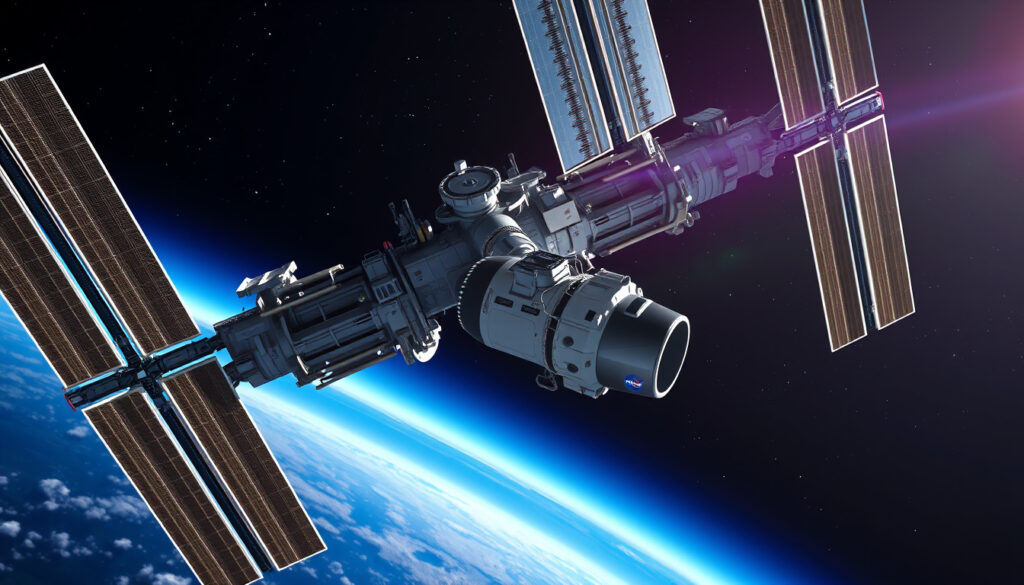
NASA Astronauts Space Station Evacuation – What Really Happened in 2020
In August 2020, NASA astronauts and cosmonauts aboard the International Space Station responded to a minor air leak by sheltering in the Russian Zvezda service module over a weekend. The incident, which did not require a full evacuation, highlighted the station’s emergency protocols and the ongoing challenges of maintaining aging infrastructure in orbit.
The leak originated in the PrK tunnel of the Zvezda service module, a passageway connecting to the aft docking port for Russian cargo vehicles. While the situation demanded careful monitoring, crew members remained safe throughout the event, with no immediate danger reported.
Overview of the ISS Incident
Depressurization leak in Russian segment
Sheltered in Zvezda module with Soyuz access
Remained in US segment, safe throughout
Issue contained, repairs ongoing through 2025
Key Insights from the Incident
- The Zvezda module, launched in 2000, serves as the Russian command center with crew quarters and docking ports
- Expedition 63 crew sheltered from Friday night, August 21, to Monday morning, August 24, 2020
- The Soyuz MS-16 crew ship remained available as an emergency return vehicle throughout
- NASA confirmed the crew faced no immediate danger during the sheltering period
- Leak rate fluctuated around 1-2 pounds per day during the monitoring period
- Both U.S. and Russian segments rely on each other for station operations
The ISS has been operational since 1998-2000, with NASA emphasizing that the station’s age contributes to wear issues such as microscopic cracks.
What Caused the Space Station Leak
Air leaks aboard the International Space Station were first detected in September 2019 in the PrK tunnel, a passageway within the Zvezda service module. The tunnel connects to the aft docking port used by Russian cargo vehicles.
Multiple patching attempts by Russian cosmonauts over the following years yielded mixed results. U.S. and Russian experts held differing views on the cause and severity of the issue, with NASA generally expressing greater concern about the persistent problem.
Understanding the PrK Tunnel
The PrK tunnel functions as a critical connection point within the Russian segment, linking various module interfaces. Inspections revealed that wear from the station’s long-term operation contributed to the development of small cracks and seal degradation.
Zvezda was originally launched in 2000 and passed all pre-launch leak tests at that time, demonstrating that the current issues stem from operational wear rather than manufacturing defects.
Emergency Procedures and Crew Response
When the air leak was confirmed in August 2020, the seven-member crew aboard the station implemented established emergency protocols. Rather than conducting a full evacuation, crew members isolated themselves in the Zvezda service module while ground teams assessed the situation.
Shelter-in-Place Protocol
The shelter-in-place approach allowed the crew to remain safely aboard the station while concentrating in an area where the leak could be most effectively monitored. Throughout the weekend, the crew had access to the Poisk mini-research module and the Soyuz MS-16 crew ship, which served as an emergency return vehicle.
NASA officials stated at the time that crewmembers were in no immediate danger and would spend the weekend inside the Zvezda service module. The module offered ample space, having originally housed early ISS construction crews during the station’s assembly phase.
Post-2025 Repair Efforts
Recent repairs attempted in 2025 appeared successful, with the PrK tunnel holding pressure after cosmonaut inspections and seal replacements. However, NASA identified a new pressure signature during evaluation, prompting additional assessments before authorizing new dockings.
NASA postponed the Axiom-4 mission launch, originally scheduled for June 10-12, to no earlier than June 19, 2025, citing the need for further evaluation of the pressure signature. A CrewDragon launch for private astronauts was also delayed despite SpaceX resolving a rocket LOX leak.
Timeline of Key Events
- September 2019 — Air leaks first detected in the PrK tunnel of the Zvezda service module
- August 20, 2020 — NASA confirms small air leak in ISS Russian segment
- August 21-24, 2020 — Expedition 63 crew shelters in Zvezda over the weekend
- 2019-2024 — Multiple patching attempts with fluctuating leak rates of 1-2 pounds per day
- November 2024 — Ongoing disagreements between U.S. and Russian experts reported
- April 2025 — Both sides reaffirm commitment to ISS operations through 2028-2030
- June 2025 — Repairs appear successful; new pressure signature prompts NASA delay
What We Know Versus Ongoing Developments
| Established Information | Remaining Questions |
|---|---|
| Sheltering occurred in August 2020, not 2024 | Exact cause of the persistent leak remains debated |
| No full evacuation took place | Timeline for definitive permanent repairs |
| NASA astronauts remained safe throughout | Whether additional structural concerns exist in other modules |
| Zvezda serves as Russian command center | Final resolution of the June 2025 pressure signature |
| Both nations committed to ISS through 2030 | Impact on future commercial crew missions |
NASA’s Official Statements
On August 20, 2020, NASA addressed the situation directly, confirming that the crew faced no immediate danger and would remain in the Zvezda module during the assessment period.
Crewmembers are in no immediate danger and will spend the weekend inside the Zvezda service module.
By June 12, 2025, following repair attempts, NASA reported that the crew was safely conducting normal operations while assessments continued.
The crew aboard the International Space Station is safely conducting normal operations. We’re assessing this latest update regarding the PrK holding pressure after repairs.
The agency has emphasized that while repairs appear successful, additional testing remains necessary before new docking operations can proceed. NASA has maintained its commitment to station operations until the planned 2030 deorbit.
ISS Background and Long-Term Operations
The International Space Station has served as a continuously crewed orbital platform since 2000, representing a collaboration between NASA, Roscosmos, and international partners. The station’s longevity brings inherent challenges as systems age and require maintenance.
Zvezda’s history includes successful pre-launch leak tests in 2000, demonstrating that the current issues stem from operational wear accumulated over more than two decades of continuous use. Both U.S. and Russian segments operate interdependently, requiring joint efforts for repairs and maintenance.
The incident underscored how emergency protocols balance crew safety with mission continuity, allowing operations to continue while addressing technical issues. Both space agencies have committed to maintaining the station through at least 2028-2030, provided safety standards continue to be met.
Summary
NASA astronauts and cosmonauts did not evacuate the International Space Station during the August 2020 air leak incident. Instead, the crew sheltered in the Russian Zvezda service module over a weekend while ground teams assessed the situation. The leak, originating in the PrK tunnel of the Zvezda module, prompted ongoing repairs that continued into 2025. NASA postponed the Axiom-4 commercial crew mission after detecting a new pressure signature during evaluation, prioritizing safety verification before new dockings. The station remains operational with both nations committed to its continued presence through 2030.
Frequently Asked Questions
Did NASA astronauts evacuate the space station in 2024?
No records indicate a 2024-specific evacuation incident matching this description. The primary sheltering event occurred in August 2020, with ongoing monitoring and repairs continuing through 2025.
What happened during the August 2020 ISS incident?
Expedition 63 crew sheltered in the Zvezda service module from August 21-24, 2020, while NASA and Roscosmos assessed a minor air leak. No full evacuation occurred, and the crew remained safe throughout.
Where did the ISS air leak originate?
The leak originated in the PrK tunnel of the Zvezda service module, a passageway connecting to the aft docking port for Russian cargo vehicles. First detected in September 2019, the issue persisted intermittently.
Were NASA astronauts in danger during the incident?
NASA confirmed that the crew faced no immediate danger. The Soyuz MS-16 remained available as an emergency return vehicle throughout the sheltering period.
What is the current status of the ISS?
The station remains operational with rotating crews on approximately six-month schedules. Repairs in 2025 appeared successful, though NASA detected a new pressure signature requiring additional evaluation before new missions dock.
How long will the ISS continue operating?
Both NASA and Roscosmos have committed to maintaining the International Space Station through at least 2028-2030, pending continued safety compliance.
What caused the air leak on the ISS?
The leak resulted from wear on the station’s aging infrastructure, with microscopic cracks and seal degradation identified in the PrK tunnel. U.S. and Russian experts have held differing views on the exact cause and severity.
More related posts
 Jordan 4 White Thunder: Price, Release & Fake Check Guide
 WSG Tirol vs Real Madrid – 0-4 Score, Lineups, Stats & Highlights
 $1,702 Stimulus Payment Date: Alaska Dividend 2025
 Kristin Davis Movies and TV Shows: Full Filmography
 How Much Do Veneers Cost? Pricing Guide for Ireland
 Champions League 2026: Format, Playoffs, & Tickets
 Weather in Los Angeles: Current Conditions, Forecast & Best Times
