Bed Bug Bite Symptoms: Identification & Treatment
Waking up with itchy, unexplained bites is unsettling — and the first question that usually follows is whether bed bugs are to blame. The bites themselves follow distinct patterns and appear on specific parts of the body that can help you tell them apart from mosquito or flea bites, though they are not always easy to identify.
Key appearance: Inflamed red spot with a dark center · Bite pattern: Rough line or cluster · Common locations: Face, neck, arms, hands · Itching intensity: Often intense, can lead to scratching · Time to onset: 1–2 days after bite · Healing duration: 1–2 weeks
Quick snapshot
- Bed bug bites often appear in lines or clusters (CDC)
- Bites are usually itchy and red (Mayo Clinic)
- Healing time is typically 1–2 weeks (NHS)
- Why some people do not react to bed bug bites at all
- Exact mechanism of itch variation between individuals
- Long-term health effects of repeated bed bug bites
- Bite marks may take 1–14 days to develop (CDC)
- Bites usually clear in 1–2 weeks (Mayo Clinic)
- Apply antiseptic cream to relieve itching (CDC clinical guidance)
- Inspect mattress seams and bed frame for live bugs (CDC clinical guidance)
- Contact pest control if signs of infestation are found (CDC clinical guidance)
Five key facts about bed bug bite symptoms, drawn from clinical sources:
| Fact | Value |
|---|---|
| Typical bite size | 1–2 mm |
| Bite pattern | Linear or clustered |
| Incubation time | 1–2 days |
| Healing time | 1–2 weeks |
| Risk of infection | Low if not scratched |
How do you tell if a bite is from a bed bug?
What do bed bug bites look like?
- Bed bug bites typically appear as inflamed red spots, often with a darker center, according to the Mayo Clinic (leading medical research institution).
- The bites may be arranged in a rough line or a cluster rather than appearing as a single isolated mark, notes the CDC (U.S. public health agency).
- Some people develop raised, swollen welts that resemble hives or pimples, according to the Cleveland Clinic (academic medical center).
The implication: the pattern — a line or cluster of small red bumps — is the strongest visual clue. A single random bite is less likely to be from a bed bug.
Where do bed bug bites appear?
- Bed bug bites tend to occur on exposed skin while sleeping, including the face, neck, arms, and hands, according to the CDC (U.S. public health agency).
- They are less common on areas covered by clothing, such as the torso or legs, the NHS (U.K. health service) confirms.
What this means: if you notice bites on your lower legs only, fleas are a more likely culprit. Bed bugs target whatever skin is exposed during sleep.
Do bed bug bites itch?
- Bed bug bites are often intensely itchy, and scratching can lead to secondary infection, warns the CDC (U.S. public health agency).
- The itching may not start immediately — some people do not notice the bites until one to several days after the bite occurred, according to the CDC.
- Bed bugs inject an anesthetic and an anticoagulant when they bite, which explains why the bite itself is usually painless, notes the Cleveland Clinic (academic medical center).
The delay between bite and itch means people often search their sleeping area days after the actual bite, giving bed bugs time to establish a larger presence.
The catch: bed bug bites are not always obvious, so physical inspection is key.
What are the first signs that you have bed bugs?
Signs of bed bug infestation other than bites
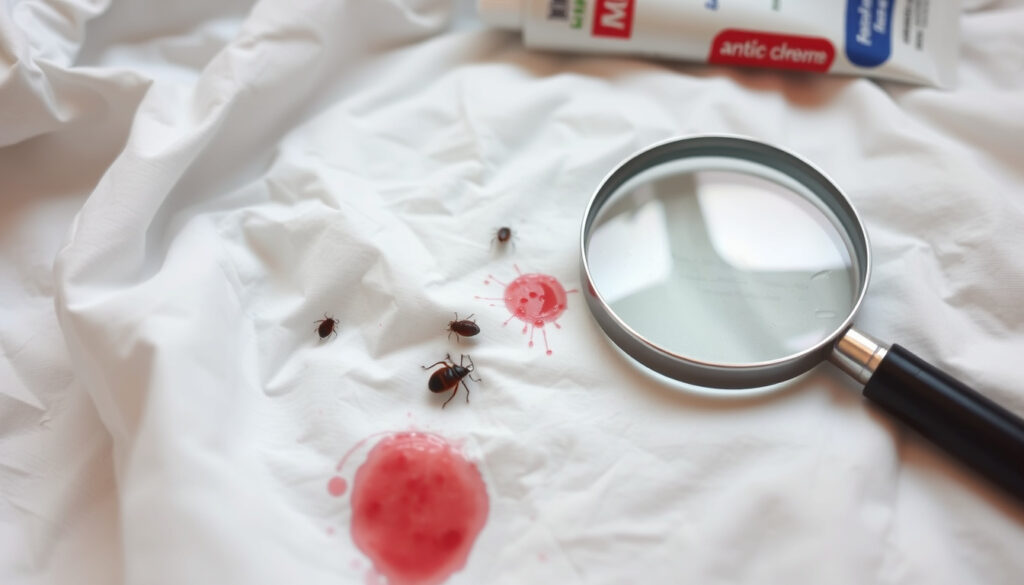
- Besides bites, early signs include small blood spots on sheets, dark fecal spots on mattresses, and a musty odor, according to the CDC (U.S. public health agency).
- Live bed bugs, shed skins, and tiny cream-colored eggs may be found in mattress seams, bed frame crevices, and behind headboards, notes the NHS (U.K. health service).
The pattern: bites alone are not proof of an active infestation. The physical evidence — spots, skins, live bugs — is what confirms the problem.
What do bed bug eggs look like?
- Bed bug eggs are about 1 mm in size, white to cream-colored, and often found in clusters in cracks and crevices near sleeping areas, according to the CDC (U.S. public health agency).
- They are difficult to see without magnification, which is why professional inspection is often necessary, the Cleveland Clinic (academic medical center) notes.
What can be mistaken for bed bug bites?
Bed bug bites vs mosquito bites
- Mosquito bites are usually solitary and appear as random, isolated bumps, whereas bed bug bites tend to form a line or cluster, according to the CDC (U.S. public health agency).
- Mosquito bites typically swell and itch within minutes of the bite, while bed bug bites may take days to appear, the Mayo Clinic (leading medical research institution) explains.
Bed bug bites vs flea bites
- Flea bites are most common on the lower legs and feet, while bed bug bites appear on the upper body, notes the NHS (U.K. health service).
- Flea bites often have a red halo around the bite center and can be intensely itchy immediately, whereas bed bug bites may have a darker center and delayed itch.
Bed bug bites vs spider bites
- Spider bites often have two distinct puncture marks and may develop into a blister or ulcer, according to the Mayo Clinic (leading medical research institution).
- Bed bug bites lack puncture marks and rarely cause the tissue damage associated with spider bites, the Cleveland Clinic (academic medical center) notes.
Bed bug bites vs hives
- Hives are raised, pale welts that change shape and move across the body over hours, while bed bug bites remain fixed in place and follow a linear pattern, the Mayo Clinic (leading medical research institution) explains.
- Hives typically resolve within 24 hours, whereas bed bug bites last for days to weeks.
Five bite types, one pattern: bed bug bites cluster in lines on exposed skin with delayed onset, while other insect bites and skin reactions have distinct timing, location, and shape differences.
| Bite type | Pattern | Common locations | Key distinguishing features |
|---|---|---|---|
| Bed bug | Line or cluster | Face, neck, arms, hands | Dark center, delayed itch, 1–2 weeks to heal |
| Mosquito | Solitary, random | Any exposed skin | Immediate swelling, itch within minutes |
| Flea | Small clusters | Lower legs, feet | Red halo, immediate intense itch |
| Spider | Single, isolated | Anywhere | Two puncture marks, possible blister |
| Hives | Shifting, changeable | Anywhere | Pale welts that move, resolve within 24 hours |
Bite appearance alone is not diagnostic. Up to 30% of people show no visible reaction to bed bug bites, according to the Mayo Clinic (leading medical research institution), meaning a person can be bitten without ever knowing it.
What this means: if you rely on bite appearance alone, you risk misidentifying the culprit.
How long does it take for bed bug bites to go away?
How to speed up healing of bed bug bites
- The CDC (U.S. public health agency) clinical guidance recommends washing bites with soap and water and applying antiseptic creams or lotions to relieve itching.
- For more severe reactions, topical steroid creams and oral antihistamines may help control symptoms, according to the same CDC clinical guidance.
- Avoid scratching to prevent secondary infection, which can prolong healing, the NHS (U.K. health service) warns.
For related skin care tips, see our guide on How to Get Rid of Ringworm.
When to see a doctor for bed bug bites
- The NHS (U.K. health service) advises seeing a GP if bites remain very painful, swollen, or itchy after pharmacy treatment, or if swelling spreads beyond the bite area.
- Serious reactions requiring emergency care include difficulty breathing, swollen tongue, blisters, fever, and irregular heartbeat, according to the Cleveland Clinic (academic medical center).
The trade-off: most bed bug bites heal on their own with simple care, but the risk of infection from scratching makes early treatment worthwhile.
For overall health monitoring, see our article on Heart Disease: Types, Symptoms, and Prevention.
How do you 100% know you have bed bugs?
Inspecting for bed bugs
- Inspect mattress seams, bed frames, headboards, and nearby furniture. CDC (U.S. public health agency)
- Look for live bugs (about the size of an apple seed, reddish-brown), shed skins, small cream-colored eggs, and dark fecal spots on sheets and mattresses. NHS (U.K. health service)
- Remember that bites alone are not definitive proof — Mayo Clinic (leading medical research institution) emphasizes that physical evidence of the bugs themselves is required for confirmation.
Professional pest control identification
- A trained pest control professional can confirm an infestation by identifying live specimens, eggs, and signs of activity that the untrained eye may miss, according to the CDC (U.S. public health agency).
- Professional inspection often involves checking cracks, crevices, and furniture joints with specialized tools, the Cleveland Clinic (academic medical center) notes.
Using monitoring devices
- Bed bug monitors and traps can be placed under bed legs and furniture to detect activity, but they are not a substitute for professional inspection, according to the CDC (U.S. public health agency).
- Passive monitors and active lures are available for ongoing detection, the NHS (U.K. health service) adds.
Self-diagnosis based on bites alone leads to false positives. The only reliable confirmation is finding physical evidence — live bugs, shed skins, or eggs — ideally identified by a professional.
The implication: professional inspection is the gold standard for confirmation.
Clarity check: what we know and what remains uncertain
Confirmed facts
- Bed bug bites often appear in lines or clusters on exposed skin (CDC)
- Bites are usually itchy and red with a darker center (Mayo Clinic)
- Healing time is typically 1–2 weeks without treatment (NHS)
- Scratching can lead to secondary infection requiring antibiotics (CDC clinical guidance)
- Bed bugs are not known to spread diseases to humans (CDC)
What’s unclear
- Why some people show no visible reaction to bed bug bites
- Exact biological mechanism behind the variation in itch intensity
- Long-term health effects of repeated bed bug bites over many years
Bedbug bites are usually painless but can become itchy.
Mayo Clinic (leading medical research institution)
A severe allergic reaction (anaphylaxis) is also possible but rare.
NHS (U.K. health service)
Difficulty breathing, swollen tongue, blisters, fever, irregular heartbeat.
For anyone waking up with unexplained bites, the decision is clear: look for the physical evidence — blood spots, fecal marks, shed skins — before assuming bed bugs are the cause. Bites alone are not a diagnosis. If you find the signs, act quickly with professional pest control, or the infestation will grow. If you don’t find the signs, other causes — from fleas to hives — deserve a closer look.
For a comprehensive overview of bed bug bite symptoms and treatment, including how to distinguish them from other insect bites, this guide offers expert-backed advice.
Frequently asked questions
Do bed bug bites spread?
Bed bug bites themselves do not spread across the body. However, scratching can cause skin breaks that lead to secondary infection, which may spread locally.
Can bed bug bites cause fever?
Fever is not a typical symptom of bed bug bites. If fever develops, it may indicate a secondary skin infection or an unrelated illness, and medical attention should be sought.
How to prevent bed bug bites?
Prevention focuses on avoiding bed bug infestations: encase mattresses, inspect secondhand furniture, reduce clutter, and use protective covers on box springs.
What is the best treatment for bed bug bites?
Washing with soap and water, applying antiseptic cream, and using oral antihistamines for itching are the standard treatments recommended by the CDC (U.S. public health agency).
Are bed bug bites contagious?
No, bed bug bites are not contagious. They cannot spread from person to person. However, bed bugs themselves can travel on clothing and luggage to new locations.
Do bed bugs bite only at night?
Bed bugs are primarily nocturnal and typically bite while people sleep, according to the Cleveland Clinic (academic medical center).
Can bed bug bites cause blisters?
Yes, in some people bed bug bites can develop into blisters, particularly in those with more sensitive skin or allergic reactions, the Mayo Clinic (leading medical research institution) notes.
How to tell if bed bugs are gone?
Confirming elimination requires a combination of no new bites, no physical signs (live bugs, shed skins, fecal spots), and ideally a follow-up professional inspection after treatment.
More related posts
 Cast of Deli Boys: Asif Ali, Saagar Shaikh & Full Cast
 How to Tame a Silver Fox Full Movie: Verified Info & Watch Online
 What is BCC in Email? Meaning, Uses, and Etiquette
 Kristin Davis Movies and TV Shows: Full Filmography
 Indiana Obituaries by Last Name: Free Search Guide
 What State Is Me? US State Abbreviations Explained (ME, MA, MO)
 Candy Store Near Me – Top Austin Shops, Hours & Delivery
 Dining Table Set for 6: Size, Material & Price Guide
